Last updated November 21, 2026
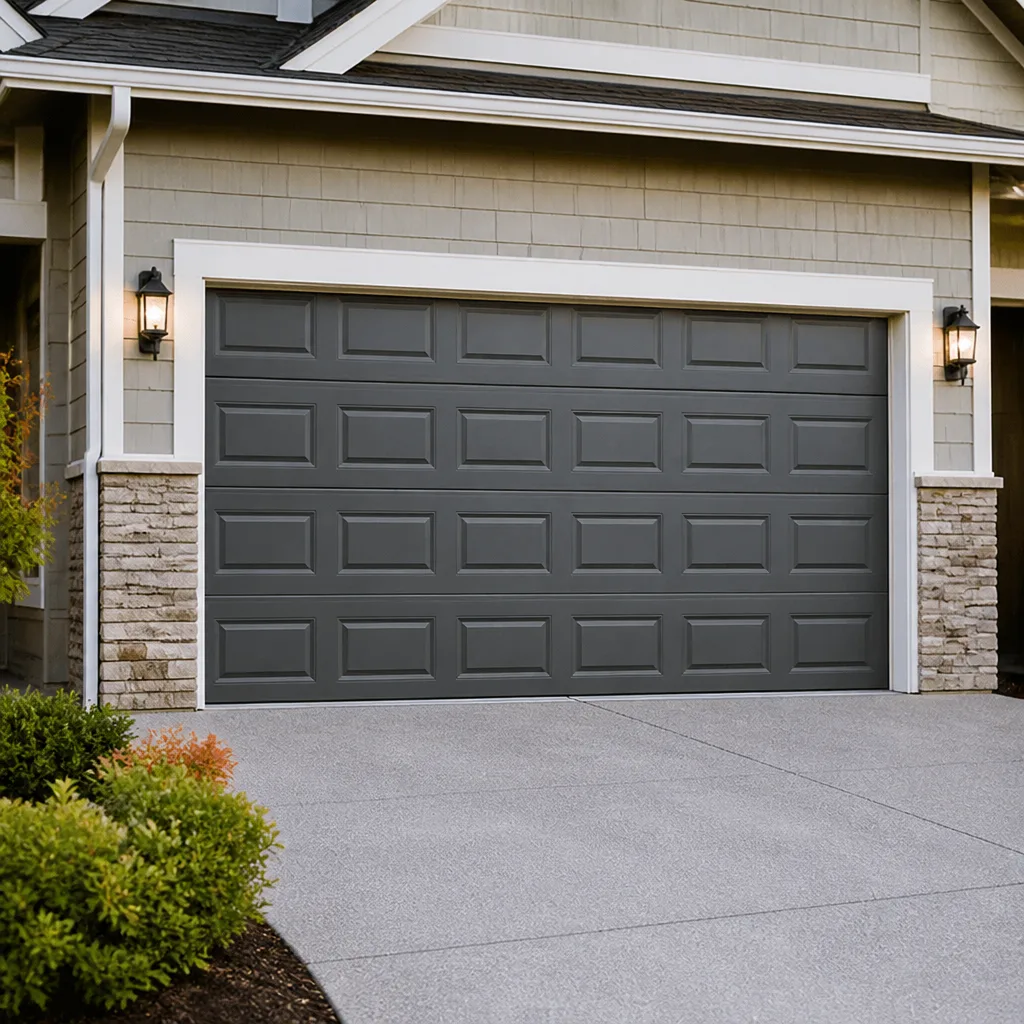 Raised-panel steel
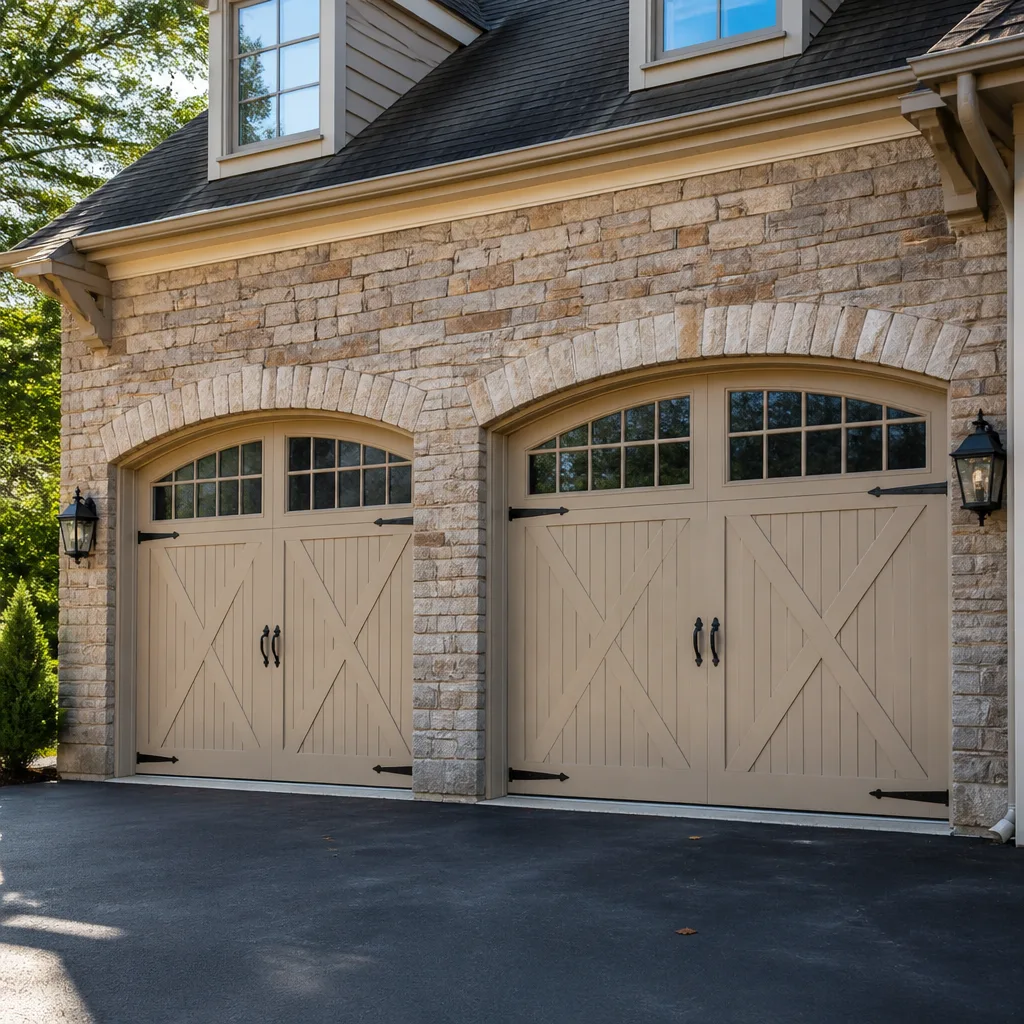 Carriage house
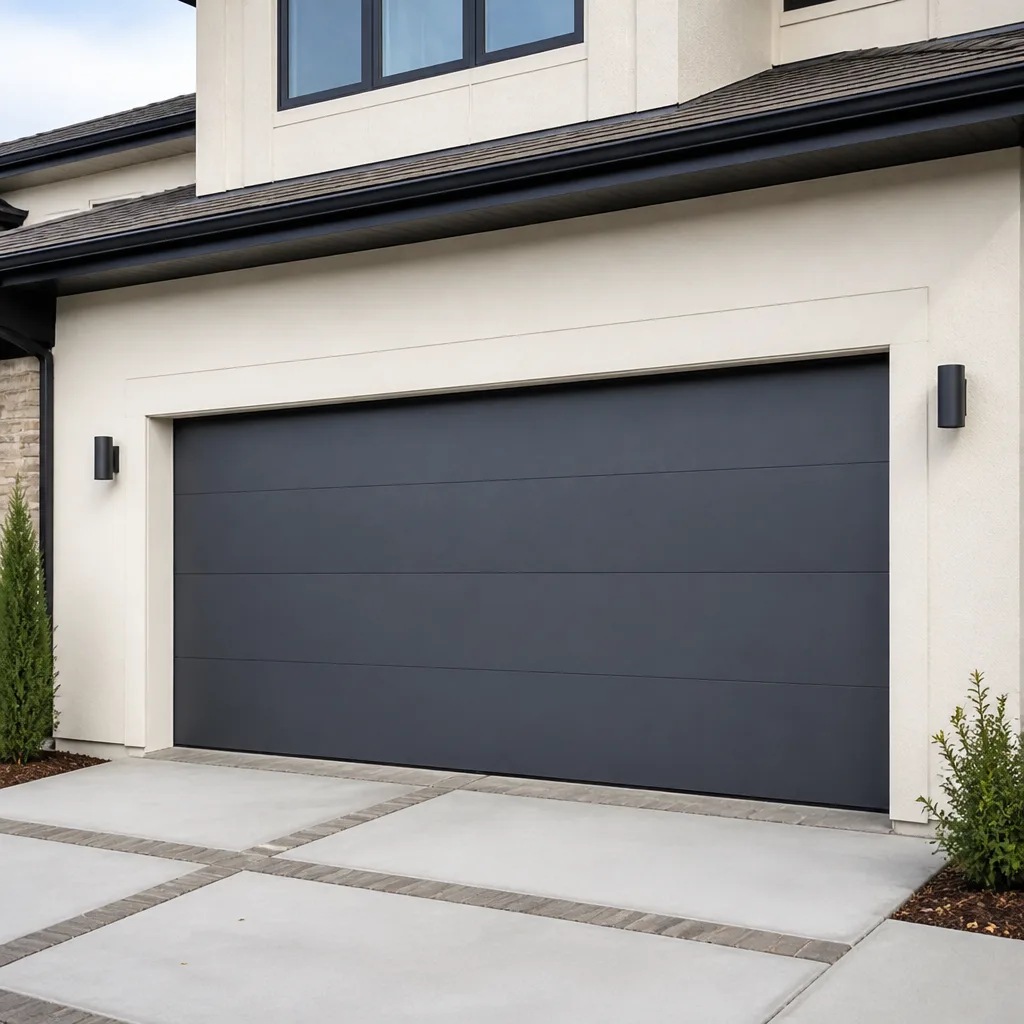 Modern flush
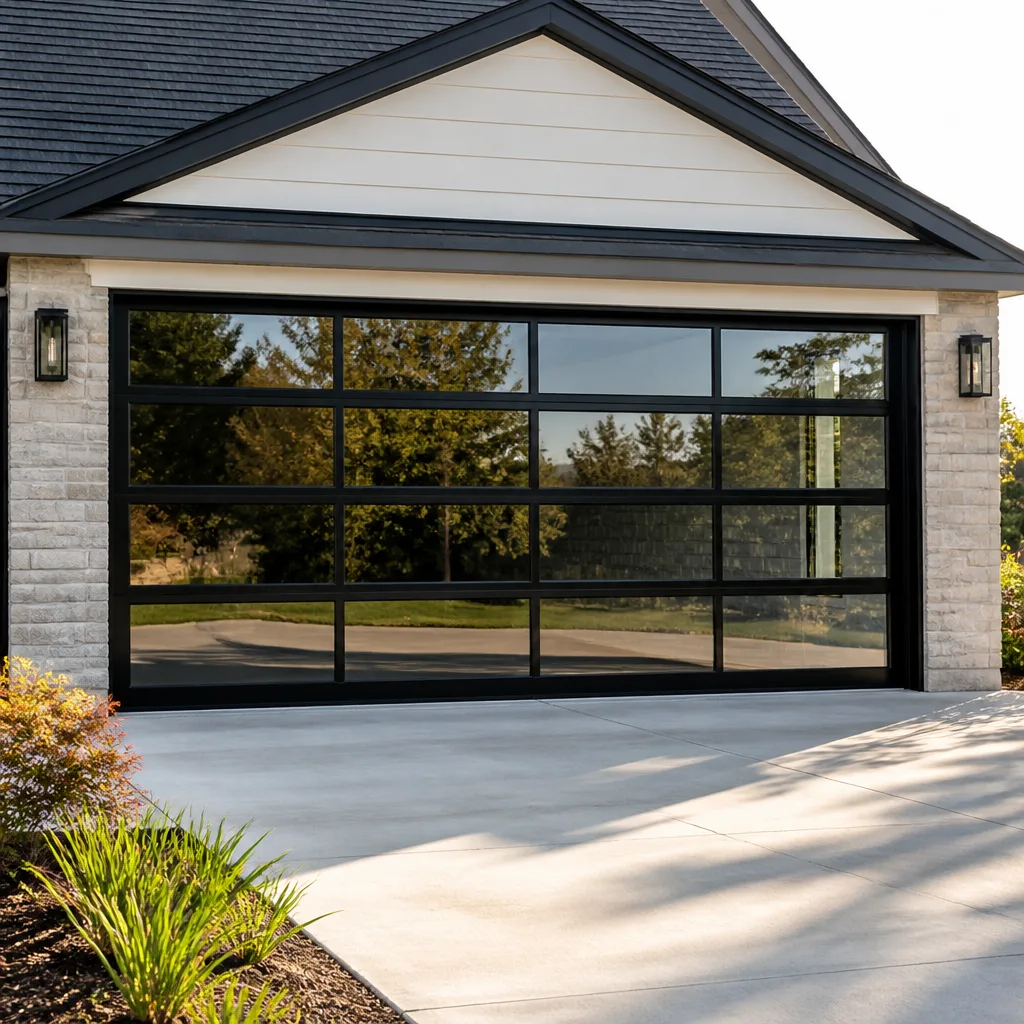 Full-view glass
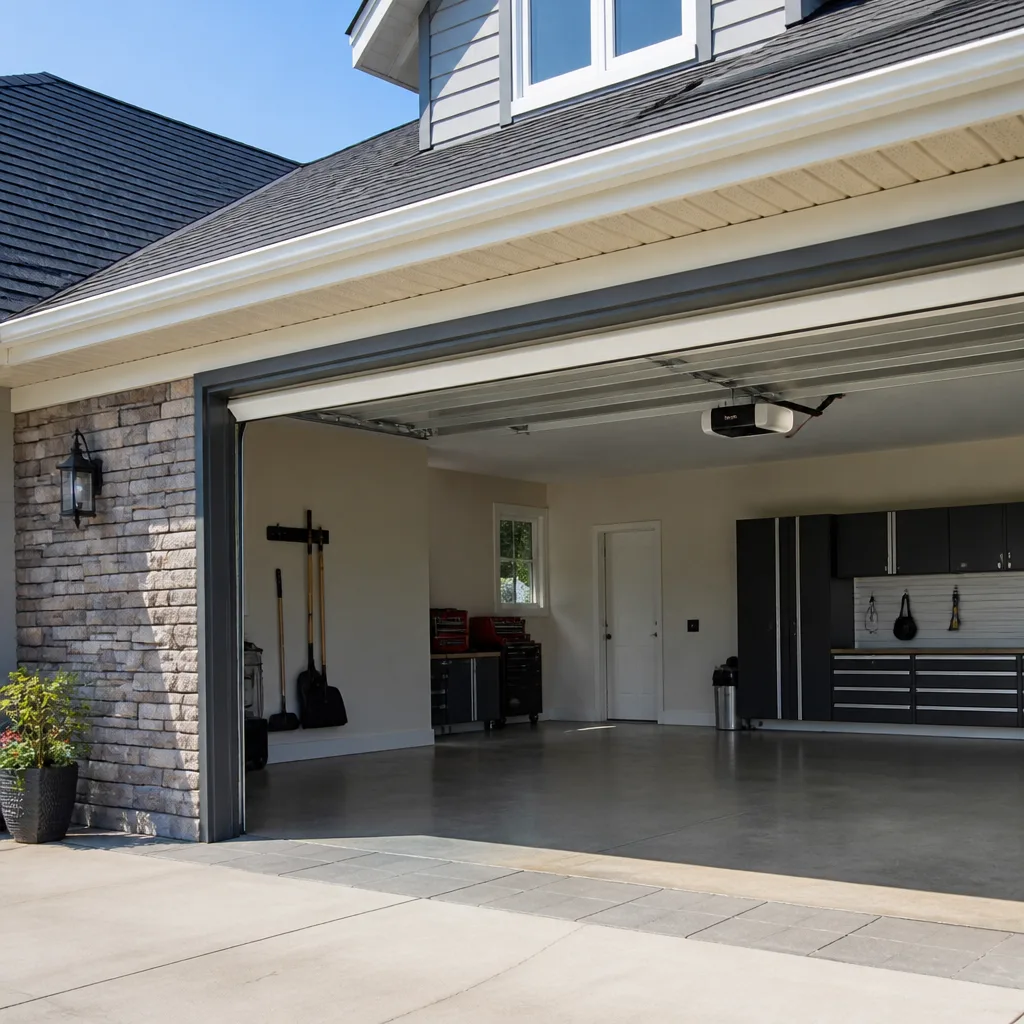 LiftMaster openers
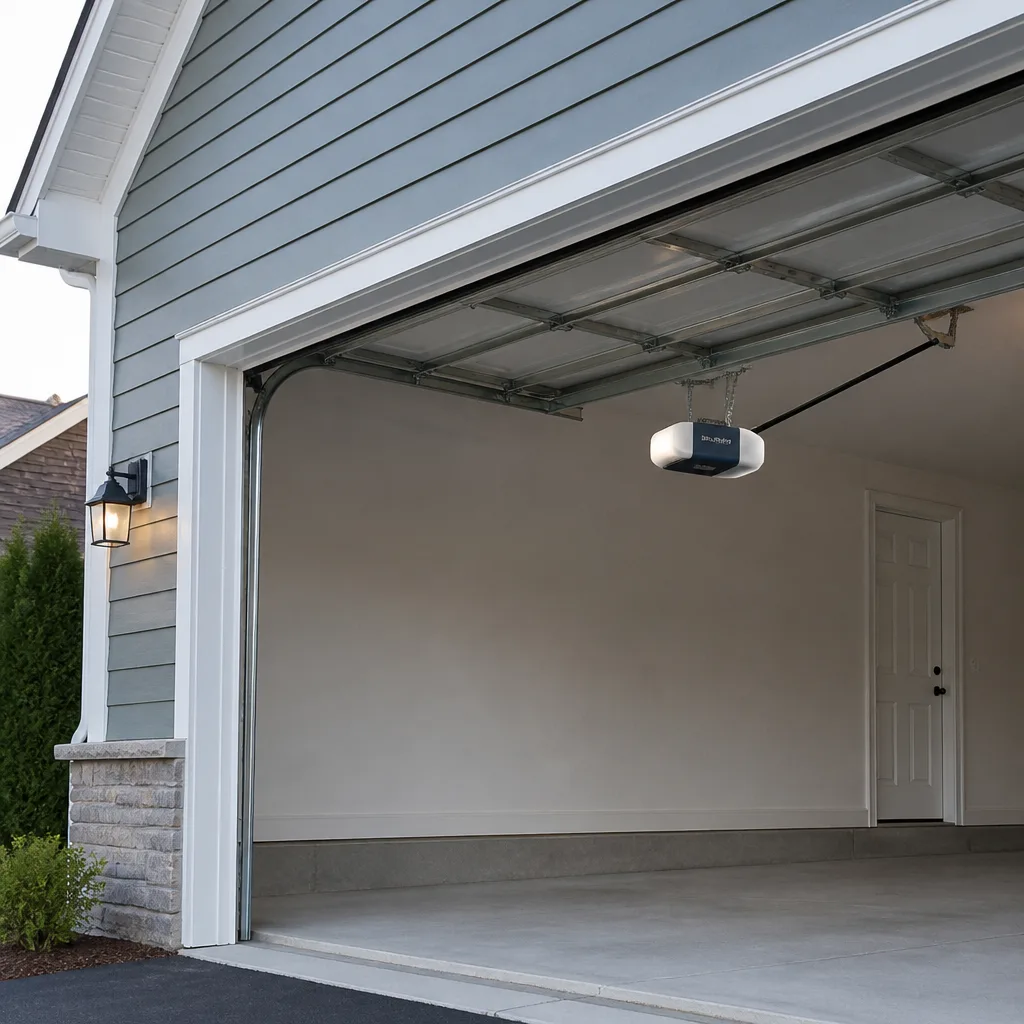 Chamberlain openers
Full 25-point door and opener safety check with every visit - springs, cables, rollers, tracks, and your LiftMaster or Chamberlain opener included
You get a price before we start. It does not change when the pro arrives.
Get your free estimateGarage Door Cost Breakdown: The Hell’s Kitchen Homeowner’s Reference for 2026
When a homeowner in Hell’s Kitchen Googles “garage door replacement cost” and sees $900, they’re reading a number built for a Phoenix suburb with a flat driveway and no building access restrictions. That figure doesn’t survive contact with a Manhattan block. Garage door pricing in Hell’s Kitchen runs 20 to 40 percent higher than the national averages quoted on most contractor websites, and the reasons have nothing to do with gouging. They’re structural: how a crew parks, what a building requires before anyone touches a panel, how a truck gets to a rear alley, and what it costs to haul old steel away in a dense neighborhood. This guide breaks down what each job type actually runs in Hell’s Kitchen in 2026, how to read a quote line by line, and how to spot the low-ball estimates that fall apart once work starts.
Quick Answer
Garage door repair in Hell’s Kitchen typically ranges from about $180 to $340 for a single torsion spring replacement, $450 to $800 for opener repair or replacement, and $1,800 to $4,500 for a full door installation, depending on size, material and building access. Those ranges sit 20 to 40 percent above the national figures quoted online, and the gap is driven by parking costs, certificate of insurance requirements, building access coordination and disposal fees rather than labor markups. The written estimate sets the final price, and the price is quoted and agreed before any work starts.
Styles & brands we work with
- Raised-panel steel
- Carriage house
- Modern flush
- Full-view glass
- LiftMaster openers
- Chamberlain openers
Table of Contents
- Why Garage Door Costs Run Higher in Hell’s Kitchen Than National Averages
- Repair Cost by Category: Springs, Panels, Tracks and Openers
- What a Full Door Installation Runs in Hell’s Kitchen
- How to Read a Garage Door Quote Line by Line
- The NYC Premium: Parking, COI, Access and Disposal
- Repair or Replace? The 2026 Math
- Red Flags in Low-Ball Quotes
- Frequently Asked Questions
Why Garage Door Costs Run Higher in Hell’s Kitchen Than National Averages
National garage door pricing assumes a driveway, a generous work area and a truck that pulls up within twenty feet of the door. Hell’s Kitchen gives you none of that. Most of the housing stock here is walk-ups, tenements converted to co-ops, and mid-rise buildings where the garage is either in a basement or tucked behind a shared loading area. A crew that needs to carry a replacement panel down a narrow side passage or hoist it through a service entrance is doing a different job than one that backs a truck up to a suburban garage.
The cost drivers stack up in ways national estimators don’t account for:
- Parking and staging. A work vehicle has to park legally somewhere near the building, and that either means commercial parking costs or a crew that spends the first twenty minutes circling. Both show up in the labor line.
- Building access coordination. Co-ops and rental buildings often require advance notice, a service elevator reservation or a building manager present. Scheduling around those windows adds time that a suburban job never absorbs.
- Certificate of insurance requirements. Many Hell’s Kitchen buildings require a certificate of insurance naming the building before a contractor is allowed past the lobby. Maintaining that paperwork and the coverage behind it is a real cost of doing business here, and it separates legitimate operators from fly-by-night ones.
- Disposal. Hauling an old steel door or a stack of bent panels out of a Manhattan building and to a transfer station isn’t free the way a dump run is in a suburb with a municipal yard.
- Height and overhead. Basement and sub-grade garages in Hell’s Kitchen often have limited headroom, which can rule out certain track configurations and slow the install.
None of this is a contractor padding a bill. It’s the actual shape of the work in this neighborhood. When you see a Hell’s Kitchen quote that beats a suburban number by a wide margin, the more likely explanation isn’t efficiency: it’s that something in scope has been quietly left out.
Repair Cost by Category: Springs, Panels, Tracks and Openers
Repair pricing splits into a handful of distinct categories, and mixing them up is one of the most common reasons a homeowner gets sticker shock. A spring replacement and a full door install share almost nothing in cost structure. Here’s how the categories break down for Hell’s Kitchen in 2026.
Torsion Spring Replacement
This is the most common repair we’re called for, and it’s the most safety-critical. A torsion spring under tension stores an enormous amount of energy; when it fails it can release that energy violently. We treat spring work as specialist territory for exactly that reason, and so should you. A single spring replacement in Hell’s Kitchen typically runs $180 to $340. A matched pair is usually replaced together because springs wear on the same cycle, so a pair costs roughly twice a single: expect $340 to $650 for the pair, installed. The written quote tells you which is which and why.
Panel Replacement
A dented or damaged bottom panel is common in tight neighborhoods where a car nudges the door or a delivery gets careless. A single panel replacement typically runs $250 to $700, depending on whether the manufacturer still produces that panel profile. Older doors, particularly Wayne Dalton and Raynor models, sometimes need a matched set because the original profile is discontinued. That pushes the cost toward the higher end and is worth knowing before you sign anything.
Track and Roller Work
Bent track or worn rollers cause a door to bind, scrape or come off its line. Track repair or realignment typically runs $150 to $400, and roller replacement $100 to $250. These are usually quick fixes, but a bent track is often a symptom of a bigger problem – a failing spring, a misaligned opener or an impact – so a good technician checks the cause, not just the symptom.
Opener Repair and Replacement
Opener repair, from a stripped gear to a dead logic board or a failed safety sensor, typically runs $150 to $450. Full opener replacement, including a new rail and belt or chain drive, runs $450 to $800 installed, and a belt-drive unit tends to cost a bit more than a chain-drive at the same feature level. We work on LiftMaster, Chamberlain, Genie and Craftsman units, among others, so a brand mismatch doesn’t become a reason to replace a whole system you didn’t need to replace.
Emergency Service
When a door is stuck open overnight or a spring snaps and the door won’t close, that’s a security and access problem, not just an inconvenience. Emergency garage door service is a core part of what we do, not an upsell, and the pricing reflects the urgency of getting a door secured. The number you agree to before the work starts is the number on the invoice.
What a Full Door Installation Runs in Hell’s Kitchen
A new door is a different project from a repair, and it’s measured and ordered rather than same-day. A full single-car garage door installation in Hell’s Kitchen typically runs $1,800 to $4,500, with material, size and building access driving the spread. A double-car or oversized opening pushes toward the top of that range or beyond. We work across the major residential brands – Amarr, Clopay, Wayne Dalton, Raynor and others – so the door gets matched to the opening rather than the opening getting forced to fit whatever a supplier has on hand.
Here’s how a typical installation sequence runs in this neighborhood:
- Free measure and written price. We measure the opening, check headroom and side room, and confirm how the building wants materials brought in. You get a written price before anything is ordered.
- Ordering. The door is ordered to spec. Lead times vary by manufacturer and profile, and a custom or discontinued-match door takes longer than a standard one.
- Scheduling around the building. We coordinate the install window with whatever access the building requires – service elevator, loading area, manager presence.
- Removal and disposal. The old door comes down and gets hauled out, with disposal folded into the quote.
- Install and balance. New tracks, springs, rollers and hardware go in, and the door is balanced and tested before we call it done.
- Opener compatibility check. If you’re keeping the opener, we confirm it’s rated for the new door’s weight and travel.
Building access isn’t a footnote on an install in Hell’s Kitchen; it can shape the whole schedule. A basement garage with a tight turn and low headroom may call for a different track radius or a low-headroom kit, and that’s a conversation to have at the measure, not on install day.
How to Read a Garage Door Quote Line by Line
A garage door quote is only useful if you can tell what’s in it. The fastest way to compare two Hell’s Kitchen estimates is to look at four things: parts listed individually, labor described by task, disposal called out explicitly, and access costs surfaced rather than buried. A legitimate quote in this market typically breaks labor to parts at roughly a 40/60 to 50/50 split for repairs and closer to 30/70 for a full install, since materials dominate a new-door job. If the ratio is far off either way, ask why.
Use this checklist to read any quote:
- Parts are named. “Spring replacement” isn’t enough; a fair quote lists the spring, its size and whether it’s one or a pair.
- Labor is described, not lumped. Removal, install and balancing should be separate from parts, or at minimum called out.
- Disposal is explicit. Old door, old panels, old hardware – confirm it’s included and not a surprise add-on.
- Access costs are surfaced. Parking, COI paperwork and building coordination should be visible, not hidden in a vague “miscellaneous” line.
- Opener is addressed. If you’re keeping it, the quote should confirm it’s compatible; if not, it should be listed separately.
- The price is fixed, and stated as such. Look for language confirming the quote is the price, subject only to changes you approve.
If you’re facing an urgent failure, our garage door repair team can talk you through what a fair emergency quote looks like before you commit. The price is quoted and agreed before any work starts, urgency or not.
The NYC Premium: Parking, COI, Access and Disposal
This is the section national pricing guides skip, and it’s the reason a Hell’s Kitchen number and a suburban number for the same job don’t match. The NYC premium isn’t a markup; it’s the real cost of operating in a dense borough, and it deserves to be itemized rather than hidden. Here’s where the extra money actually goes.
- Parking and staging. A work vehicle has to sit somewhere legal and close during the job. In Hell’s Kitchen that often means a commercial parking fee or a crew managing around a block with limited loading space. It’s time and money that a driveway suburb never sees.
- Certificate of insurance. Many buildings here require a COI naming the building and sometimes the managing agent before a contractor can enter. The local pro is licensed and insured as their state requires, and maintaining that coverage and the paperwork is a cost baked into every legitimate quote.
- Building access coordination. Service elevators, rear entries, loading docks, manager schedules – each one adds a step to the job that a suburban garage door doesn’t have.
- Disposal fees. Hauling old doors and panels out of a Hell’s Kitchen building and to a transfer point costs money in a way a municipal dump run doesn’t.
When a quote comes in far below the local range, the NYC premium didn’t disappear. It got cut somewhere – often in the COI paperwork, the disposal, or the crew’s ability to actually show up. That’s the trade you’re making when you chase the lowest number.
Repair or Replace? The 2026 Math
The break-even figure for 2026 is roughly this: if a repair costs more than about 40 percent of a new door installation, and the door is showing structural wear beyond the failing part, replacement usually wins on value. If the failing part is isolated – a spring, a single panel, an opener – repair almost always makes more sense. A torsion spring replacement at $180 to $340 against a full install at $1,800 to $4,500 is no contest; you repair.
Replacement starts to make sense in a few specific situations:
- Structural wear across the door. Multiple bent panels, a sagging top section, or a frame that’s rusting through means the failing part is the whole door, not a component.
- Repeated repair on the same system. If you’re calling for the same door more than once in a couple of seasons, the door is telling you something.
- Opener and door hitting end of life together. When both fail in the same stretch, a combined install is often cheaper than two separate repairs.
- Safety and code concerns. A door without functioning safety sensors or with a failing balance is a safety issue. Ask your building’s management and your city’s building department what a replacement needs to satisfy.
The right answer depends on the door. We’ll tell you straight whether the math favors repair or replacement for your specific opening, and the written estimate gives you the number to decide on. A full new-door project includes a garage door installation measure and a written price before anything is ordered, so there’s no commitment while you weigh it.
Red Flags in Low-Ball Quotes
A quote that beats the Hell’s Kitchen range by a wide margin usually carries one or more of these warning signs. Scanning for them before you book is the cheapest insurance you’ll ever buy.
- No COI, or vagueness about it. If a contractor can’t produce a certificate of insurance for your building on request, the building may not allow them in – and you may be the one holding the liability.
- Parts left unnamed. A quote that says “spring replacement” without a spring size or count is either cutting corners or hoping you won’t ask.
- Disposal missing from scope. If haul-away isn’t listed, it’s either an add-on later or getting dumped somewhere it shouldn’t be.
- Labor and parts blended into one number. You can’t check a ratio you can’t see, and a blended number is easy to inflate.
- Unlicensed or uninsured operator language. The local pro is licensed and insured as their state requires. If a quote can’t confirm that, walk.
- Inferior or unmatched parts. Springs rated below the door’s weight, rollers that don’t match the track, or a panel profile that doesn’t match the door – each shortens the life of the whole system.
- Pressure to skip the written estimate. Every legitimate quote here should be written, and the price is quoted and agreed before any work starts. Verbal-only pricing is a red flag on its own.
Common Mistakes to Avoid
- Comparing a Hell’s Kitchen quote to a suburban number. The national averages you see online are built for a different operating environment. Compare local quote to local quote, not to a Phoenix figure.
- Hiring on price alone. The lowest quote often hides missing COI, missing disposal or unnamed parts. A slightly higher quote with full scope is usually the cheaper job in the end.
- Not asking about the COI before the visit. Many Hell’s Kitchen buildings require a certificate of insurance before a contractor can enter. Confirm it up front so the job doesn’t stall at the lobby.
- Assuming a single spring is enough for a pair job. Springs wear together. Replacing one and leaving the other means you’ll likely be back soon for the second, and the pair price is usually cheaper than two separate calls.
- Keeping a mismatched opener on a new door. An opener rated for a heavier door can strain the system. Confirm compatibility at the measure, not after the door is up.
- Treating a spring failure as a DIY fix. Torsion springs are under extreme tension and are one of the most dangerous parts of a garage to handle. A trained professional should do this work, and a safety conversation belongs in every quote.
- Ignoring the written estimate. If the number isn’t written down and agreed, it isn’t a price; it’s a guess. Insist on a written quote before anyone starts.
See the difference
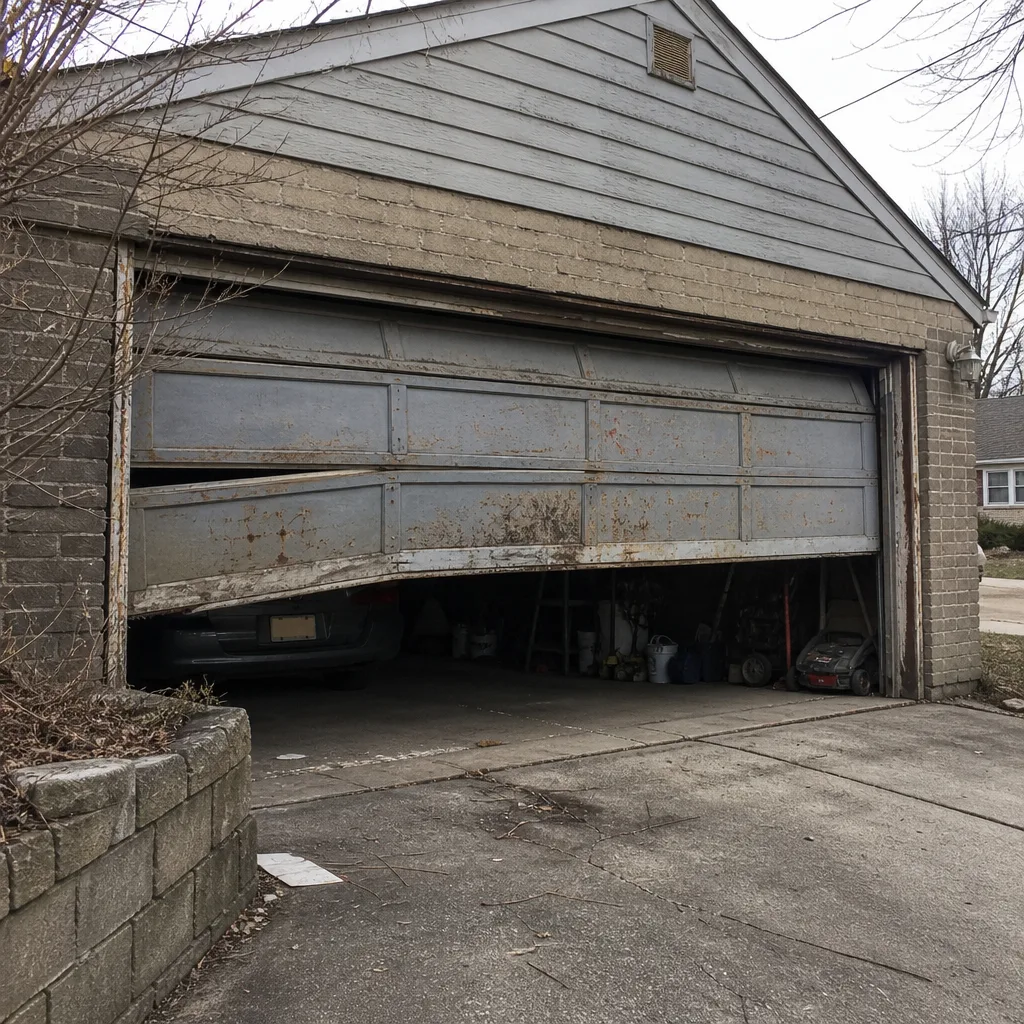 Before
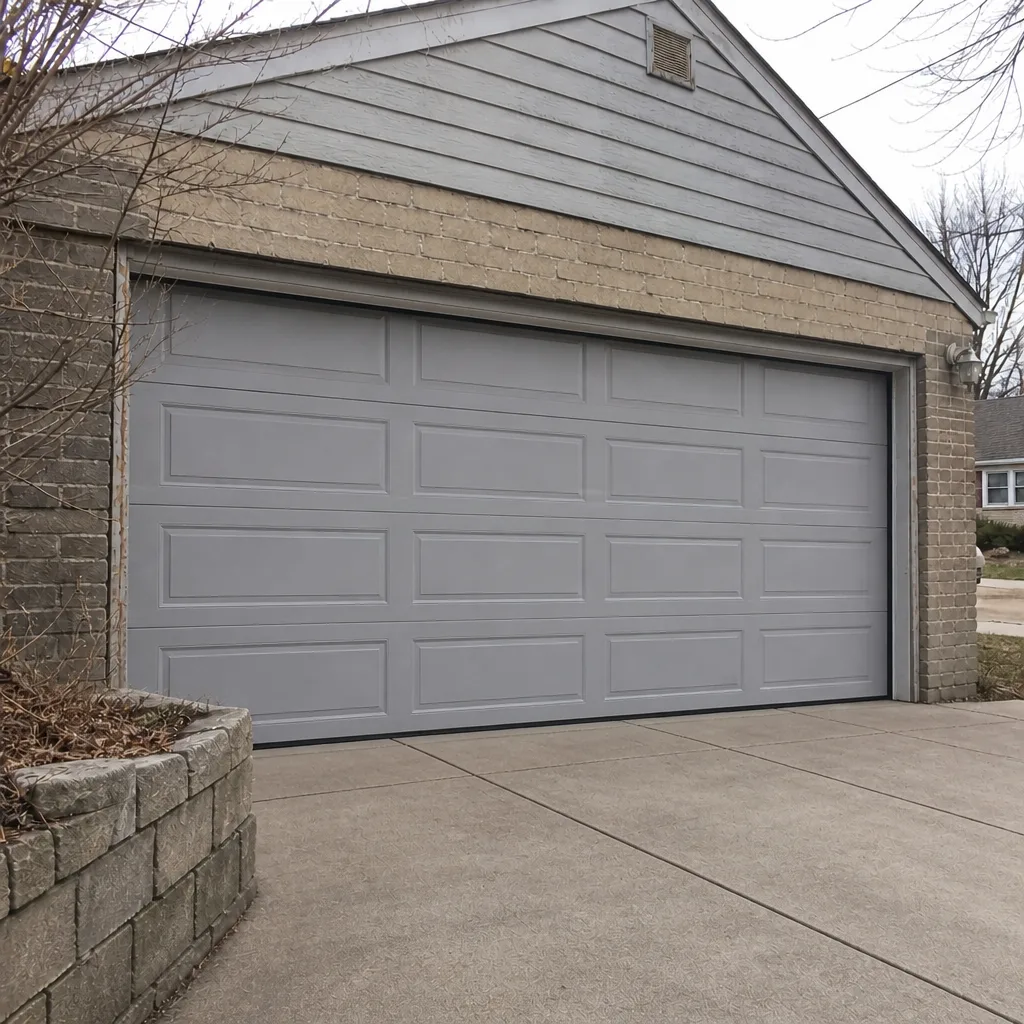 After
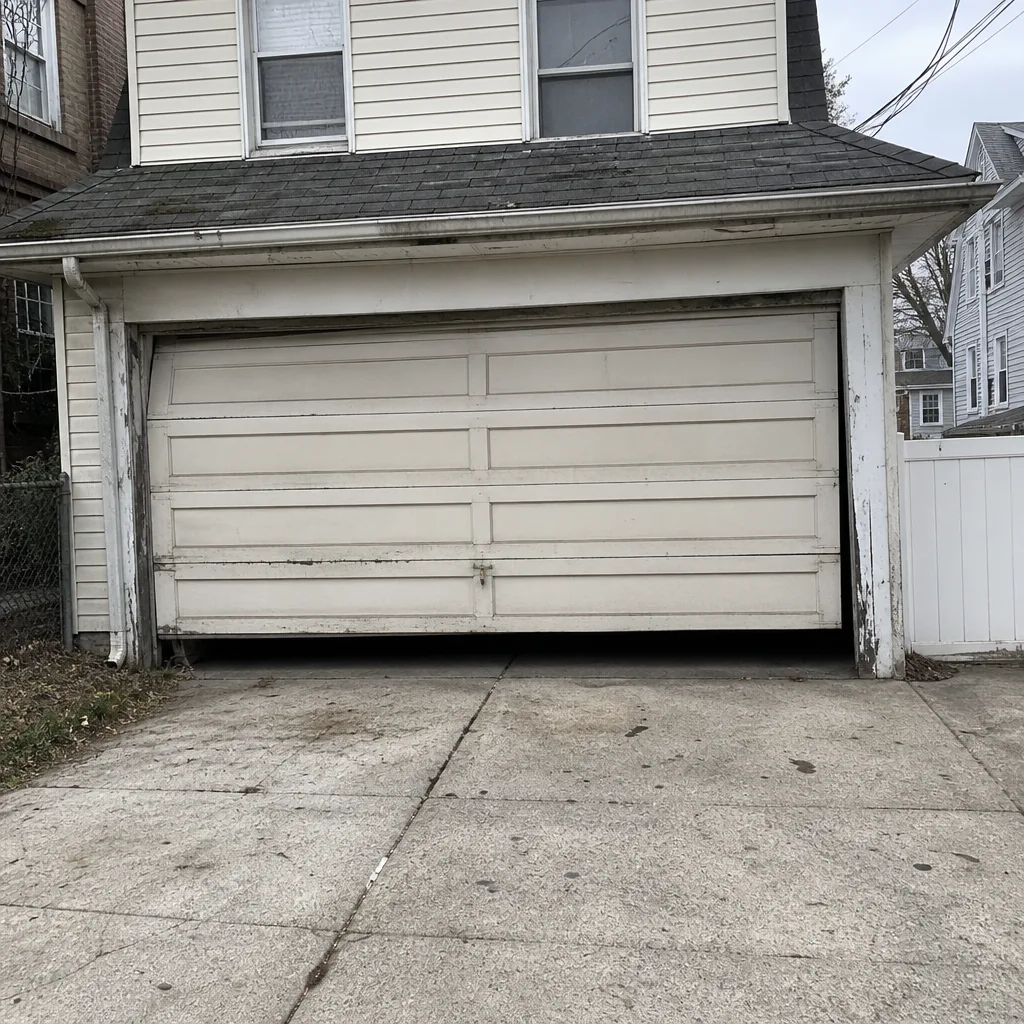 Before
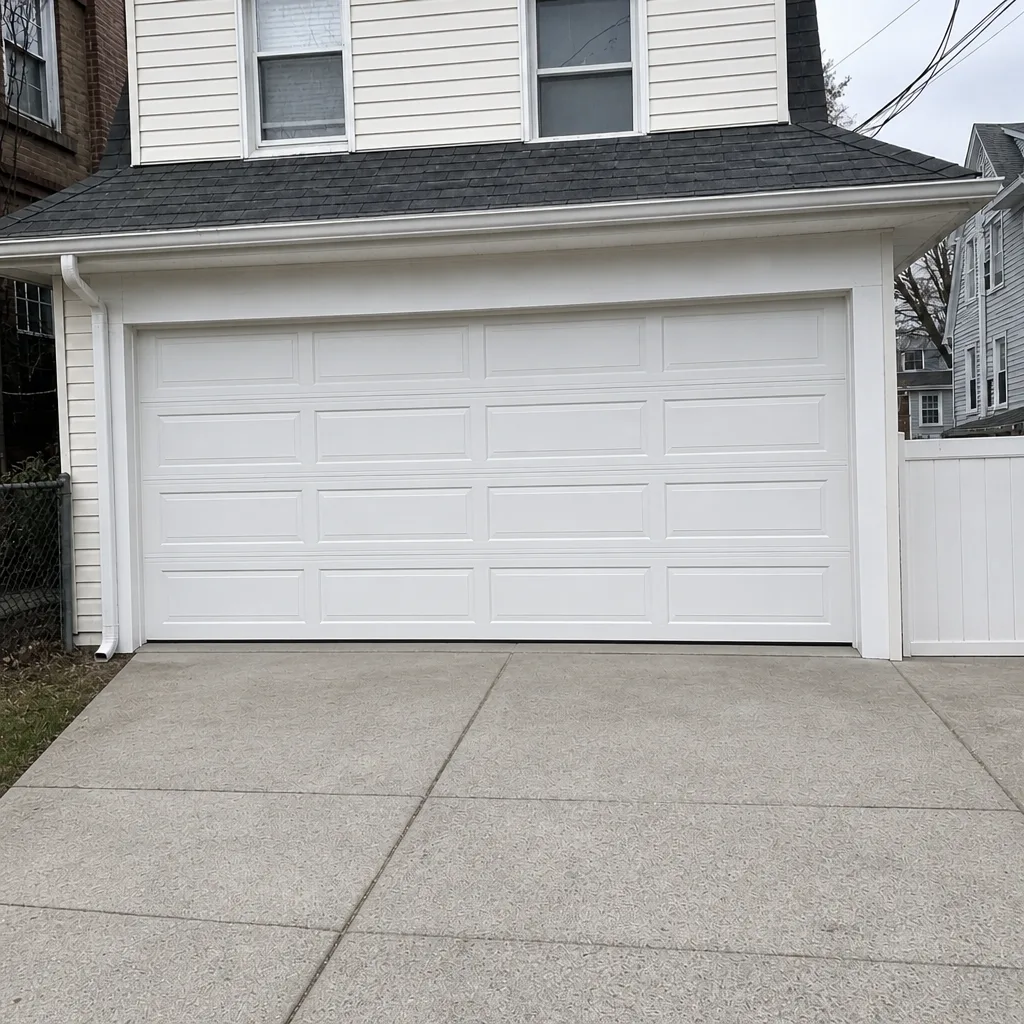 After
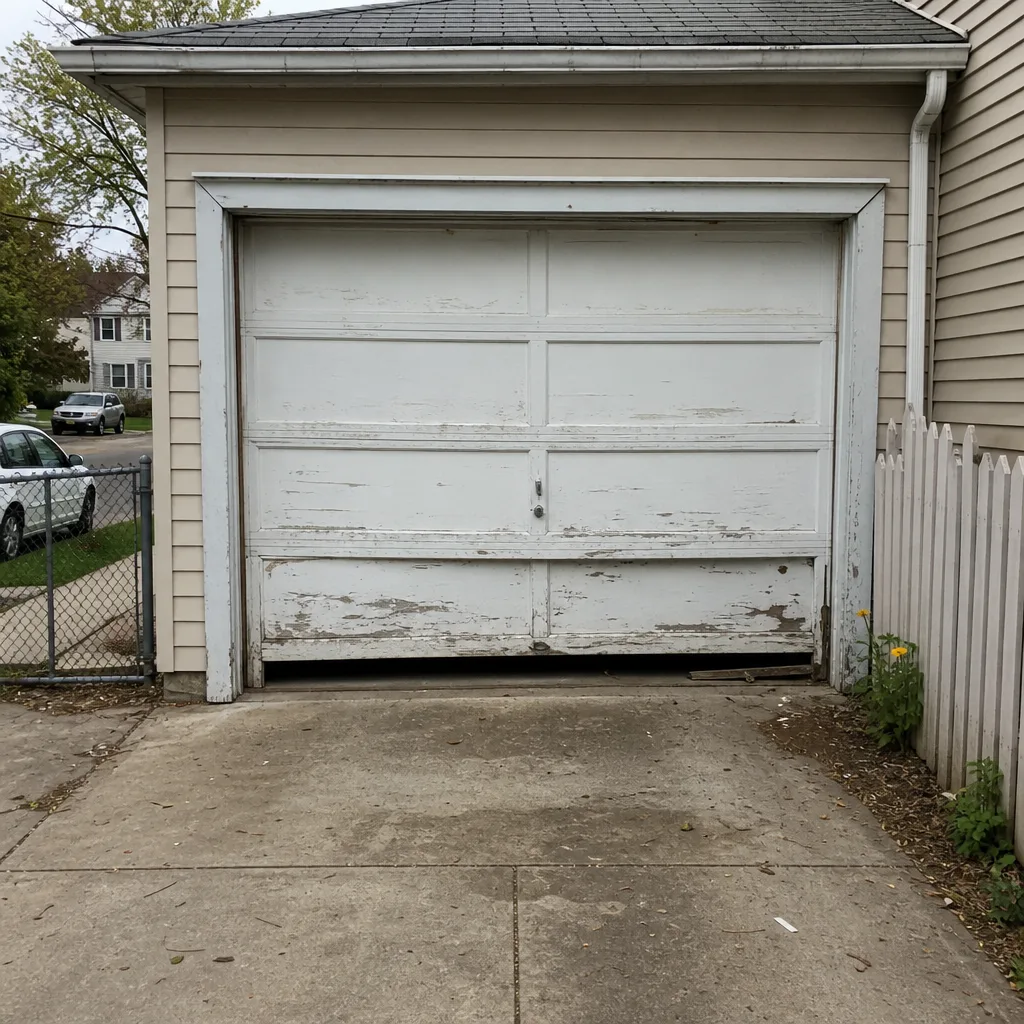 Before
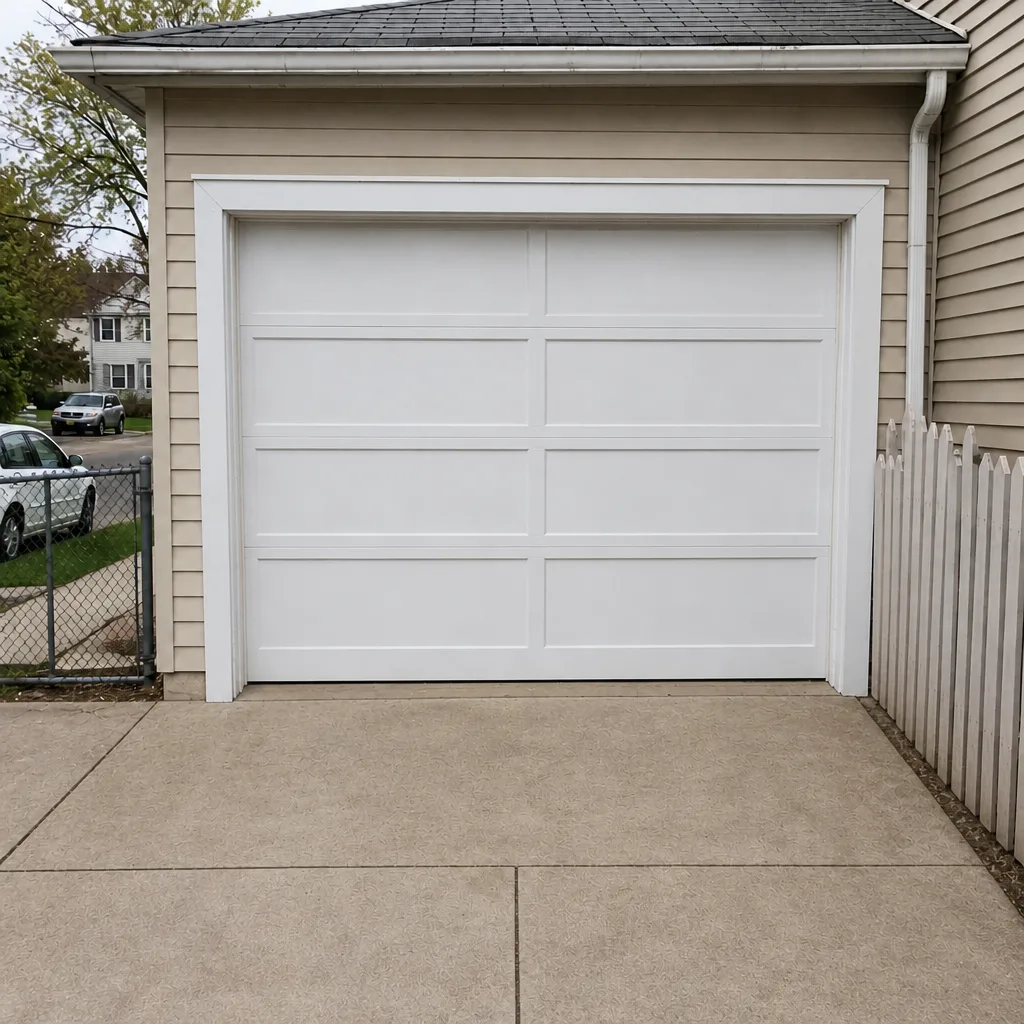 After
When to Call a Professional
Call us when a door won’t close all the way, when a spring snaps, when the opener runs but the door doesn’t move, or when a panel is bent enough to compromise the door’s line. Call when a door is stuck open overnight and the garage is your building’s only access – that’s a security situation, not a scheduling one. Call when you’re weighing repair against replacement and want a straight answer instead of a sales pitch. Call when your building wants a COI on file before anyone shows up, so the paperwork doesn’t delay the work. Our technicians have up to 9 years of experience, we work on your brand across the major manufacturers, and one call covers it whether you need a spring, an opener, or a full door. Garage Door Repair Hell’s Kitchen offers free estimates in Hell’s Kitchen – call (877) 801-5288.
Frequently Asked Questions
Garage door repair in Hell’s Kitchen typically runs $180 to $340 for a single torsion spring, $250 to $700 for a single panel, $150 to $450 for opener repair, and $150 to $400 for track work. Those ranges reflect the local NYC premium – parking, COI, building access and disposal – that national online estimates don’t include. The written quote sets the final price. Call (877) 801-5288 for an exact quote – estimates are free.
Because the online numbers are built for a suburban job with a driveway and no access restrictions. Hell’s Kitchen quotes absorb commercial parking, a certificate of insurance for the building, service elevator or manager coordination, and disposal fees that a suburb never sees. Expect local pricing to run 20 to 40 percent above national averages, and treat a quote far below that range with suspicion. Call (877) 801-5288 for a written local estimate.
No. The price is quoted and agreed before any work starts, and the written estimate sets the final price. If we open the door and find something outside the original scope, we stop, explain it and quote it before touching anything, so you approve the change or you don’t. Call (877) 801-5288 to book a free estimate.
Yes. Emergency garage door service is a core part of what we do, and a door stuck open overnight is a security situation we take seriously. We can talk through what a fair emergency quote looks like and get a technician scheduled. Call (877) 801-5288 – the price is agreed before any work starts.
The local pro we connect you with is licensed and insured as their state requires. Our technicians are garage door specialists, not generalists, and have up to 9 years of experience across all the major residential door and opener brands. Ask for the certificate of insurance for your building before the visit if your building requires one. Call (877) 801-5288 for a free estimate.
If the damage is a single panel and the rest of the door is structurally sound, repair the panel – it typically runs $250 to $700. If multiple panels are bent, the frame is sagging or the door is rusting through, replacement usually wins at $1,800 to $4,500. The 2026 break-even is around 40 percent of a new-door cost. Call (877) 801-5288 and we’ll give you a straight answer on your specific door.
The Bottom Line
Hell’s Kitchen garage door pricing runs 20 to 40 percent above national averages, and now you know why: parking, COI requirements, building access coordination and disposal are real costs of working in this borough, not contractor padding. Repair ranges from $180 to $340 for a single spring up to $800 for an opener replacement, and a full install runs $1,800 to $4,500. Read every quote line by line, insist on a written estimate, and treat a low-ball number as a question to ask rather than a deal to take. The written quote sets the price, and the price is agreed before any work starts. If you’re facing a snapped spring, a stuck door or a full replacement in Hell’s Kitchen, our garage door opener repair and spring specialists can give you a straight answer and a free estimate. One call covers it.
Contact
If your door is down, stuck, or just due for replacement, call (877) 801-5288 for a free estimate. We’re a dedicated garage door specialist, not a handyman service, and we work on your brand – LiftMaster, Chamberlain, Genie, Clopay, Amarr, Wayne Dalton, Craftsman and Raynor. From a snapped spring to a full new door, our technicians have up to 9 years of experience, and we serve Garage Door Repair Hell’s Kitchen and the surrounding blocks. Call today to book a free estimate and get a written price before any work starts.
Written by the team at Garage Door Repair Hell’s Kitchen.