Last updated November 21, 2026
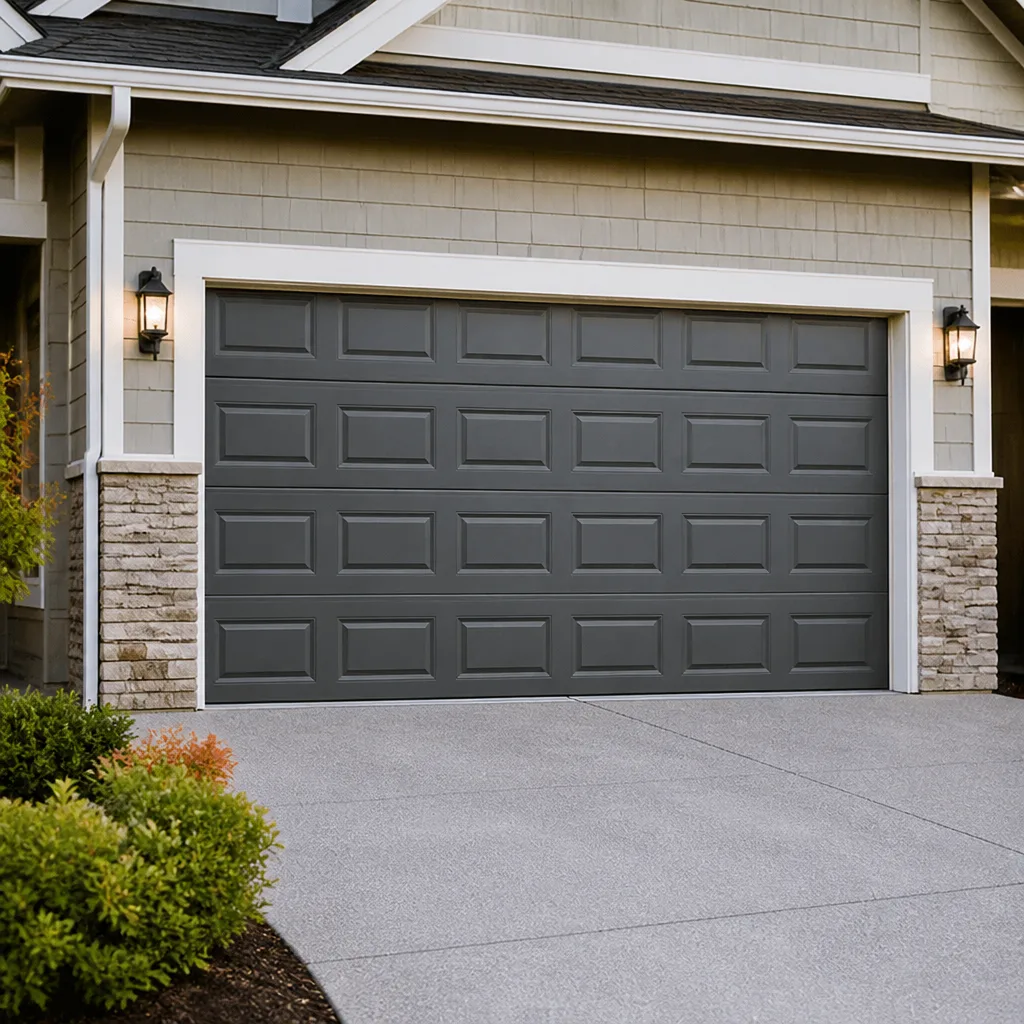 Raised-panel steel
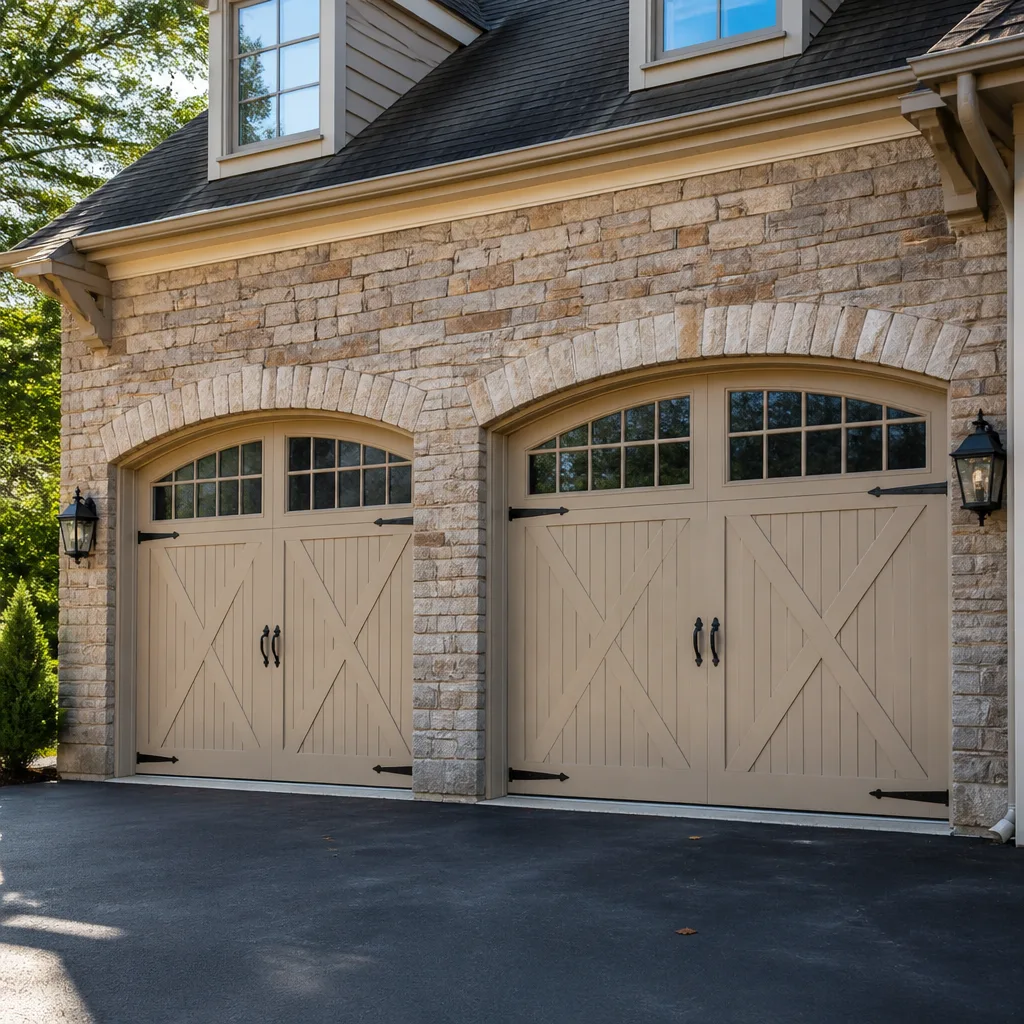 Carriage house
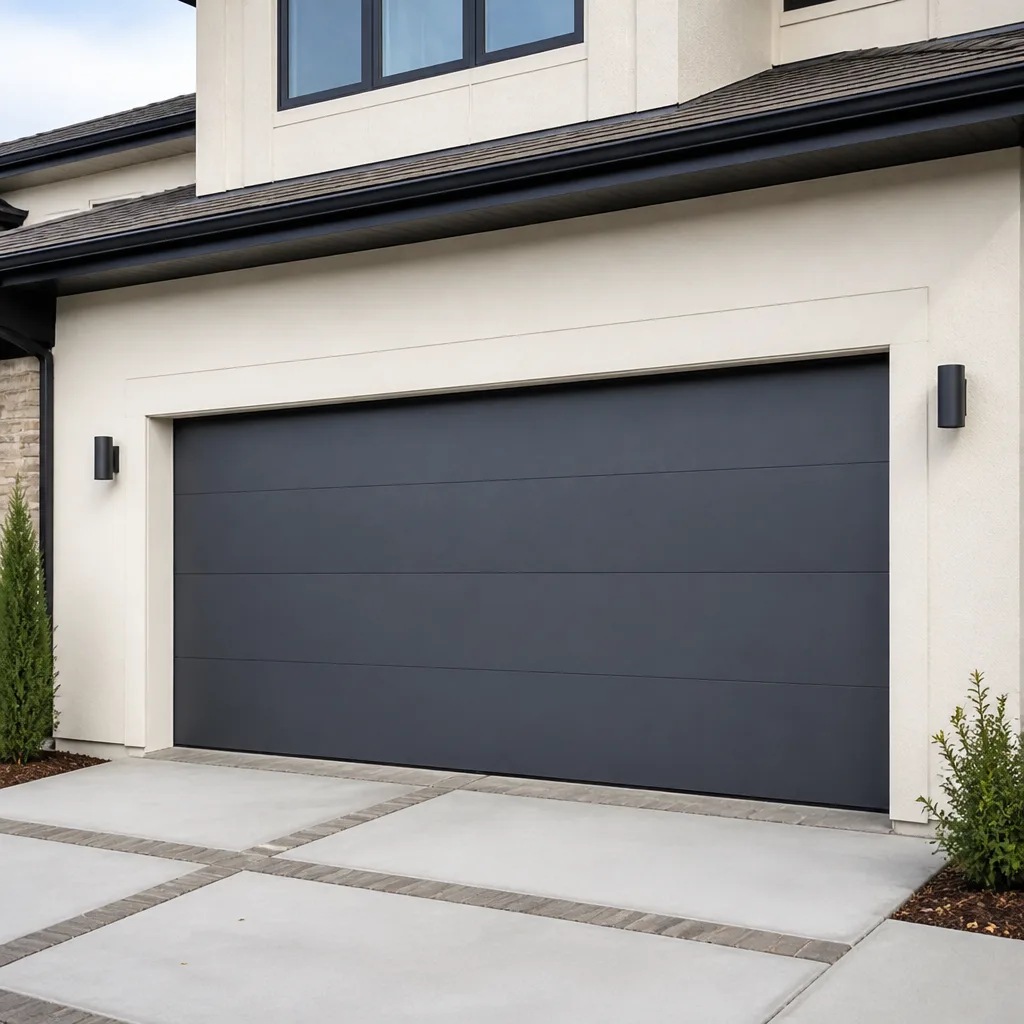 Modern flush
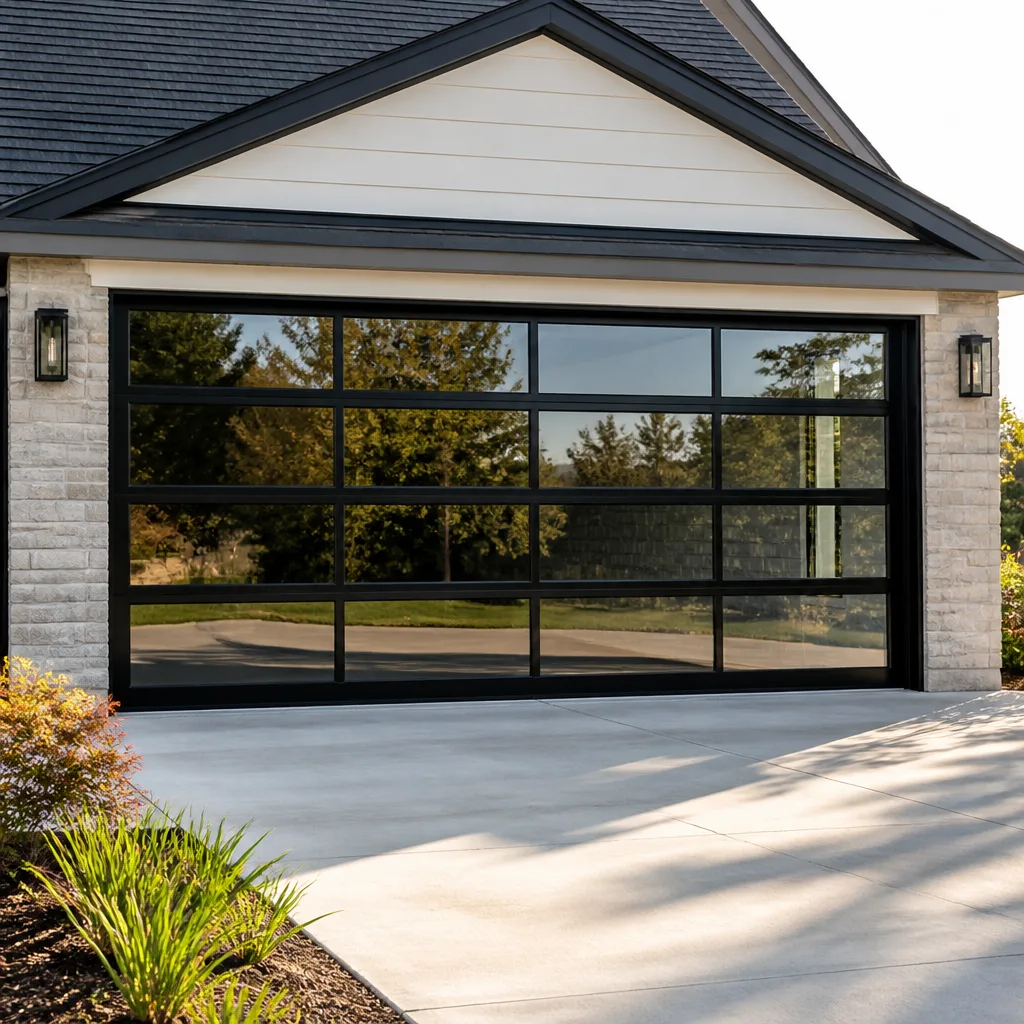 Full-view glass
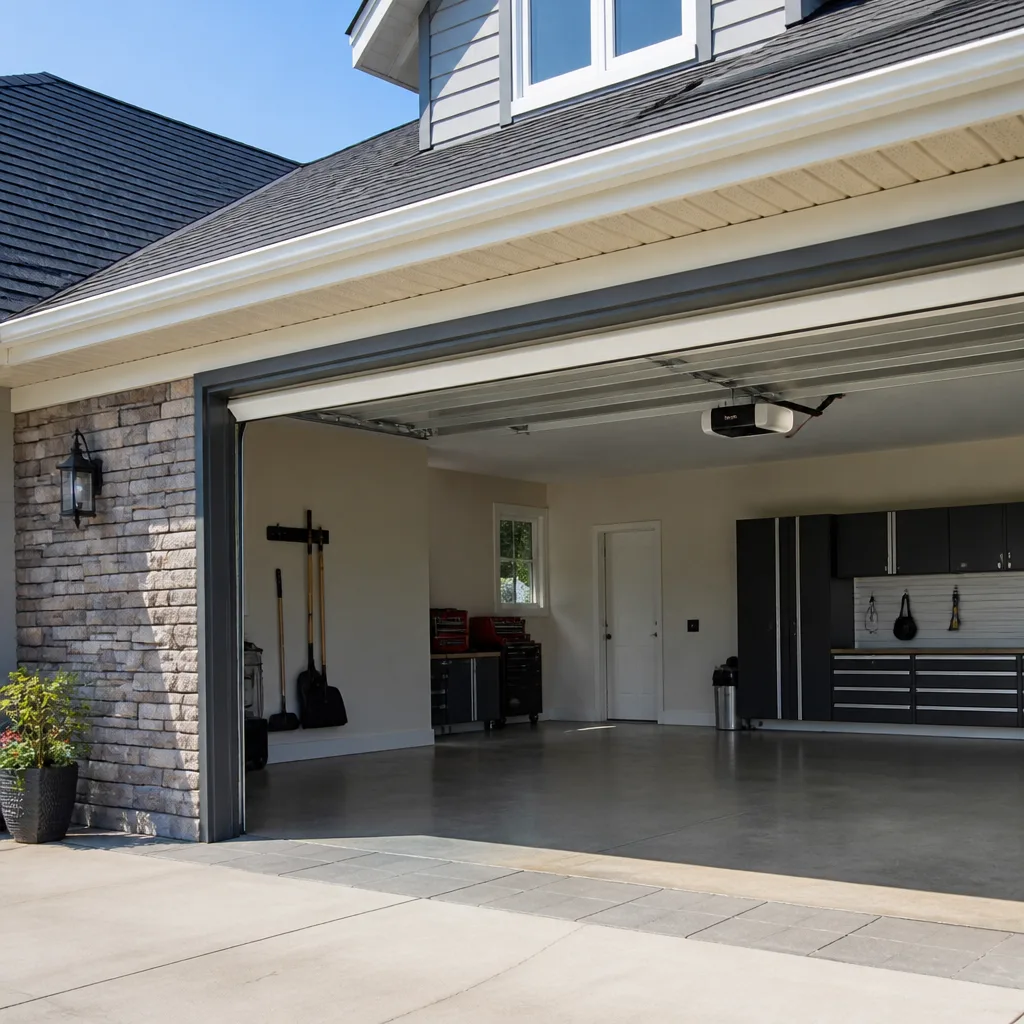 LiftMaster openers
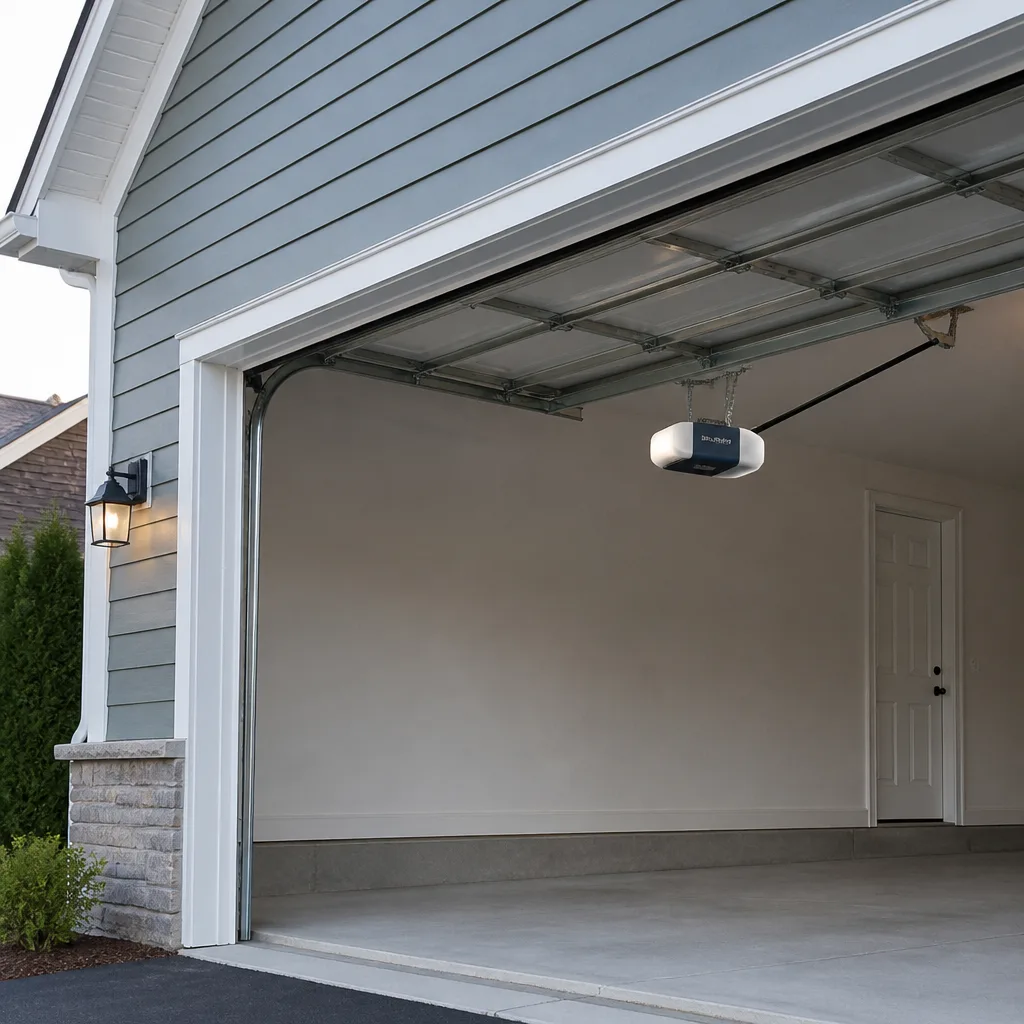 Chamberlain openers
Full 25-point door and opener safety check with every visit - springs, cables, rollers, tracks, and your LiftMaster or Chamberlain opener included
You get a price before we start. It does not change when the pro arrives.
Get your free estimateSeasonal Garage Door Care for Hell’s Kitchen: Year-Round Homeowner’s Guide
Most garage door advice you’ll read assumes four gentle seasons and a driveway that gets raked twice a year. Hell’s Kitchen doesn’t work that way. What we have here is a freezing winter bracketed by two rough transition periods – the freeze-thaw grind of March and early April, and the sudden cold snap of late fall – plus a humid summer that quietly wears down wood doors, seals and opener circuit boards. The spring thaw deserves the most attention and gets the least. It’s the single most damaging stretch of the year for torsion and extension springs in New York City, not because March is cold, but because the temperature swings back and forth across freezing dozens of times. Every one of those cycles works the metal. This guide walks through what each season does to your door and what you can do about it before something fails.
Quick Answer
The most important seasonal garage door care in Hell’s Kitchen is a pre-freeze inspection in late fall, a hands-off visual check of springs and cables during the March freeze-thaw period, and a lubrication routine timed to the temperature – not the calendar. Winter brings salt infiltration, frozen bottom seals and opener strain; summer brings humidity swelling and heat stress on openers. Year-round, below-grade parking garages in Hell’s Kitchen age door hardware faster than open-air driveways because of trapped moisture and poor ventilation.
Styles & brands we work with
- Raised-panel steel
- Carriage house
- Modern flush
- Full-view glass
- LiftMaster openers
- Chamberlain openers
Table of Contents
- Fall Prep: What to Do Before the First Hard Freeze
- Winter in Urban Garages: Salt, Frozen Seals and Opener Strain
- Spring Transition: Why Post-Winter Is the Highest-Risk Season
- Summer Humidity and Heat: Wood, Seals and Circuit Boards
- How Below-Grade Garage Ventilation Changes the Wear Pattern
- The Hell’s Kitchen Seasonal Checklist
- Lubrication, Balance and Safety Checks Done Right
- What Seasonal Care and Common Repairs Cost in Hell’s Kitchen
Fall Prep: What to Do Before the First Hard Freeze Hits West Midtown
The work you do in October and early November sets the tone for the whole winter. Once temperatures drop below freezing and stay there, everything gets harder – lubricants thicken, rubber seals stiffen, and any small problem you noticed in September becomes a real failure in January. The goal of fall prep is to fix the marginal stuff while the weather still cooperates.
We think of fall as the season of tightening and sealing. Metal contracts as it cools, which means hardware that felt snug in July can develop play by November. Rubber and vinyl weather seals lose flexibility and crack. Wood panels absorb moisture from fall rain and then freeze, and that freeze-thaw at the panel surface is what makes paint flake off by February.
Your fall prep list
- Inspect the bottom seal and side seals. Look for cracks, compression set (the seal stays flat when the door lifts), and gaps at the corners. A stiff seal will freeze to the floor and get torn off the first time the door cycles in cold weather.
- Lubricate hinges, rollers, and the torsion bar bearings. Use a cold-rated garage door lubricant, not general-purpose WD-40. Thick summer grease becomes sticky paste below 20°F.
- Test the door balance. Disconnect the opener, lift the door halfway by hand, and let go. A balanced door stays put. If it drops or rises, the spring tension is off and should be adjusted by a technician before winter.
- Check the tracks for alignment. Cold weather makes a slightly bent track worse. Any track that looks off-plumb will bind in January.
- Clear the garage floor at the door threshold. Snow melt puddling against a bottom seal freezes overnight and locks the door to the floor.
- Have the opener serviced if it’s older than five years. The gear and sprocket assembly in LiftMaster and Chamberlain units wears quietly and can fail when load spikes in cold weather.
If your door has any visible damage – a cracked bottom panel, a bent track, a spring with visible gaps in the coil – fall is the time to schedule garage door repair, not January. West Midtown buildings get busy in the fall and scheduling is easier then than it is during a cold snap.
Winter in Urban Garages: Salt, Frozen Seals and Opener Strain
Winter is where Hell’s Kitchen garages differ most from suburban ones. Cars come in off the street covered in road salt and slush, and that salt doesn’t just disappear – it drips onto the garage floor, splashes up onto the bottom panels, and works into the bottom seal and hinges. Over a season, salt infiltration is one of the leading causes of rusted bottom brackets, corroded roller stems and seized hinges.
Salt damage is slow and cumulative, which is why people don’t notice it until a hinge fails. The fix isn’t complicated: rinse the bottom of the door and the threshold area with fresh water whenever the weather allows a thaw, and wipe down hinges and brackets a few times over the winter.
Frozen bottom seals
This is a specific Hell’s Kitchen problem. When a car pulls in with wet tires, water pools at the door threshold. Overnight it freezes, and the rubber bottom seal bonds to the concrete. The next morning, the opener cycles and either tears the seal off its retainer or the safety reverse kicks in and the door doesn’t close. Two things help: keep the threshold area clear of standing water, and use a bottom seal rated for cold flexibility.
Opener strain in sub-20°F temperatures
Openers are rated for cold, but the load on them increases in winter. Cold grease in the rail, stiff rollers, a stiff seal, and a slightly out-of-balance door all combine to make the opener work harder. If your opener is a Genie or Chamberlain unit with several years on it, winter is when a marginal gear or capacitor shows itself. A door that stutters or reverses for no obvious reason in January is usually an opener working at the edge of its capacity, not a mysterious electrical fault.
If your opener is struggling in the cold, garage door opener repair is worth scheduling before the unit fails completely. A failing opener that stops mid-cycle and leaves the door open in winter is an access and security problem, not just an inconvenience.
Spring Transition: Why Post-Winter Is the Highest-Risk Season for Springs and Cables
The freeze-thaw period from late February through mid-April is the single highest-risk window for garage door spring and cable failure in Hell’s Kitchen. This is the most important thing to understand about seasonal garage door care in New York City, and it’s the point most guides skip over.
Here’s the mechanism. A torsion spring is a coiled steel spring under heavy tension. Every time the ambient temperature crosses the freezing point – which in March happens most days – the steel expands and contracts by a tiny amount. Multiplied across dozens of cycles over six weeks, that flexing fatigues the metal. The spring doesn’t fail because it got cold; it fails because it got worked harder than at any other time of year.
Cables are under the same stress. A galvanized cable that has picked up a little winter salt corrosion is weaker than it was in the fall, and the spring’s freeze-thaw flexing puts extra strain on the cable ends where they attach to the bottom bracket or the drum.
What to check during the spring transition
- Listen to the door. A new pop, twang or grinding sound during operation is worth investigating. Spring fatigue often announces itself before failure.
- Look at the spring coil. Gaps in the coil, a visibly stretched spring, or a spring that hangs loose are all warning signs. Do not touch a spring under tension – one of the most dangerous DIY jobs in home maintenance is spring work, and it should only be done by a trained specialist.
- Check the door’s balance. If the door suddenly feels heavy or slams down when released halfway, the spring has lost tension.
- Examine the cables where they meet the bottom bracket. Fraying, kinks, or rust at the connection point are the early signs of a cable about to fail.
- Watch the door’s travel. A door that hangs on one side during opening means a spring or cable problem on the other side.
If your door shows any of these signs in the spring, call a professional. Spring replacement is a specialized service, and it’s one where the safety margin is narrow. Our technicians have up to 9 years of experience, and spring work is a big part of what they do.
Summer Humidity and Heat: Wood, Weather Seals and Opener Circuit Boards
Summer in Hell’s Kitchen is humid, and humidity is the enemy of a wood garage door. Wood panels expand as they absorb moisture from the air, and expanded panels bind against the frame. Paint blisters from the inside out where moisture gets trapped behind it, and panel joints open up. If you’re in an older Hell’s Kitchen building with a wood door – not uncommon in converted carriage houses and older walk-ups – a summer humidity routine makes a real difference.
Keep the door painted or sealed with an exterior-grade finish, and check for peeling or blistering in late spring before the humid months hit. Once moisture gets behind the paint, the cycle of swelling and drying accelerates panel damage.
Weather seals in summer
Rubber and vinyl seals that got stiff over the winter soften and can sag in summer heat. A sagging bottom seal leaves a gap, and a gap means water intrusion the next time it rains. Check the bottom seal in June and again in August, and replace it if it no longer sits flat against the floor.
Opener circuit boards in the heat
This is the problem most homeowners don’t anticipate. Opener circuit boards are sensitive to heat, and a cramped, poorly ventilated garage with a hot car parked in it can push internal temperatures well above what the board was designed for. LiftMaster and Chamberlain units with logic boards under the light cover are especially prone to heat-related faults – the opener works fine in the morning and fails in the afternoon. If your opener is intermittently unresponsive in July and August, the board is a likely culprit, not the remote.
If your opener is failing intermittently in summer heat, schedule garage door repair Hell’s Kitchen to have it inspected. A failing board can be replaced before it strands you outside.
How Below-Grade Garage Ventilation Changes the Wear Pattern Year-Round
A lot of Hell’s Kitchen garages are below grade – basement-level parking in mid-rise buildings, or garages set into a slope. Those spaces have a different wear profile from open-air driveways, and the differences matter for anyone planning seasonal care.
The core issue is trapped moisture. Below-grade garages don’t dry out the way an open driveway does. In summer, condensation forms on cool concrete and metal surfaces as warm humid air enters. In winter, that same moisture freezes on cold hardware and stays frozen for weeks. Over a year, a small amount of trapped water in a hinge or a track bracket causes rust and seizure far faster than outdoor exposure would.
Year-round issues in below-grade Hell’s Kitchen garages
- Condensation on tracks and rollers. Rust forms on the tracks and roller stems, and once rust is present, roller bearings wear out quickly.
- Seal swelling and shrinkage. Rubber seals in a below-grade garage cycle through swelling (summer) and shrinkage (winter) more dramatically than in a dry garage.
- Opener stress from humidity. Excess humidity accelerates wear on the opener’s electrical components.
- Faster spring fatigue. The constant moisture-heat cycle actually accelerates the metal fatigue that built up in the spring.
- Track corrosion. Galvanized tracks in a below-grade garage will rust before they would in an open-air driveway.
What helps: run a dehumidifier if you can, keep cardboard and stored items off the concrete so air can circulate, and inspect the bottom seal and rollers more often than you would for an open driveway. If you’re managing a building garage, schedule an inspection in both spring and fall.
The Hell’s Kitchen Seasonal Checklist
Here’s the sequence we recommend for a typical Hell’s Kitchen garage door, season by season. This assumes a steel or wood door with a chain or belt-drive opener – most of what we see in the neighborhood.
Fall (September to early November)
- Test balance with the opener disengaged.
- Inspect bottom and side seals for cracks or compression set; replace if stiff.
- Lubricate hinges, rollers, torsion bar bearings and the opener rail with cold-rated lubricant.
- Check tracks for alignment and rust; clean and lubricate.
- Test the safety reverse with a block of wood on the floor – the door should reverse and not crush it.
- Schedule any repairs that appeared over the summer.
Winter (November to February)
- Keep the threshold and floor clear of standing water and slush.
- Rinse salt residue off the bottom panels and hinges when a thaw allows.
- Watch for opener strain: stuttering, slowing at the halfway point, or reversing without a clear cause.
- Check that the bottom seal isn’t freezing to the floor.
Spring (March to May)
- Listen for new sounds – pops, twangs, grinding.
- Look at the springs from a safe distance; don’t touch a spring under tension.
- Check cables at the bottom bracket for fraying or rust.
- Test balance again after winter.
- Have any warning sign inspected before it fails.
Summer (June to August)
- Check wood panels for blisters, peeling paint or joint separation; reseal if needed.
- Test that the bottom seal still sits flush against the floor.
- Watch the opener for intermittent failures during hot afternoons.
- Keep below-grade garages as dry as possible.
Lubrication, Balance and Safety Checks Done Right
Most of the seasonal care a homeowner can safely do comes down to three things: lubricating the right parts with the right product, testing the door’s balance, and testing the safety reverse. Everything else that involves springs, cables, tracks or the opener’s internal mechanism is best left to a technician.
Lubrication
Use a purpose-made garage door lubricant, not general-purpose oil or grease. Apply it to hinges at the pivot points, the roller stems where they meet the hinge, the torsion bar bearings at the end of the spring assembly, and the opener rail if it’s a chain-drive unit. Bushing type rollers may only need occasional lubrication, while bearing type rollers are usually sealed. Avoid lubricating the track itself unless rust is present, and never lubricate the bottom of the door or the rubber seal.
Balance test
The balance test is a simple piece of diagnostics that tells you whether the springs are doing their job. Disengage the opener, lift the door halfway by hand, and let it go. Balanced: it holds. Springs weak: it drops. Springs over-tensioned: it rises. A door that fails the balance test is a door that will eventually fail a technical inspection, and the springs are the likely cause.
Safety reverse test
Place a block of wood on the floor under the door, close it with the opener, and confirm that the door reverses on contact with the block. If it doesn’t, the opener’s force limit needs adjustment, or the safety sensor needs attention. Test this monthly – not just seasonally – because the sensor alignment can drift.
What not to touch
Torsion springs, extension springs, cables, drums, and the brackets that hold them are under high tension. Adjusting or replacing any of these components without the right training and tools is dangerous and can cause serious injury. A trained professional should handle all spring and cable work. Our technicians do this work routinely and know the risk going in.
What Seasonal Care and Common Repairs Cost in Hell’s Kitchen
Seasonal garage door care itself is usually free to evaluate. What costs money is replacing the things that wear out. Here’s a rough guide to what things typically run in Hell’s Kitchen. Every job is quoted in writing before work starts, and the written estimate sets the final price.
- Seasonal inspection and tune-up: Free assessment with a written quote for any recommended work
- Spring replacement (one spring): $180 to $340 typical
- Spring replacement (matched pair): about twice the single-spring price, since pairs are replaced together
- Cable replacement: quoted per job after inspection
- Bottom seal replacement: quoted per door; depends on seal type and door width
- Roller and hinge service: quoted per set
- Opener repair or board replacement: quoted after diagnosis
- Full garage door installation: free measure and written price; scheduled, not same-day
The point of seasonal care is to catch the failures before they happen. A snapped spring in January costs a lot more in stress and disruption than a scheduled inspection in October. For garage door installation or a full replacement, we come out to measure and give you a written price – that work is measured and scheduled rather than same-day.
Common Mistakes to Avoid
- Using the calendar instead of the thermometer. Lubrication timing in Hell’s Kitchen should follow temperature, not the season. A cold-rated lubricant applied in November is fine; one applied in July and left through winter is not. Match the product to the temperature window.
- Ignoring the spring thaw. The March freeze-thaw period is when springs and cables are most likely to fail, and it’s the time when most people are least likely to check. Watch and listen during the transition, not just at the start of winter.
- Using WD-40 instead of a proper garage door lubricant. WD-40 is a penetrating oil, not a lubricant. It actually strips the grease out of bearings and makes wear worse. Use a purpose-made garage door product.
- Adjusting springs themselves. Spring work is one of the most dangerous jobs in home maintenance. A spring under tension can cause serious injury if it slips. Trained specialists only.
- Parking a wet, salted car with the door closed for hours. The moisture and salt have nowhere to go, so they sit against the door, the seal and the track. Open the door briefly on a dry day to air it out.
- Assuming a below-grade garage is the same as an open driveway. It isn’t. Moisture, condensation and salt all behave differently in a below-grade space, and the inspection schedule should reflect that.
- Waiting for the fault before servicing the opener. An opener working near its capacity is one cold morning away from failing. If your opener has more than five years on it and cycles daily, a service check in late fall saves a mid-winter emergency.
See the difference
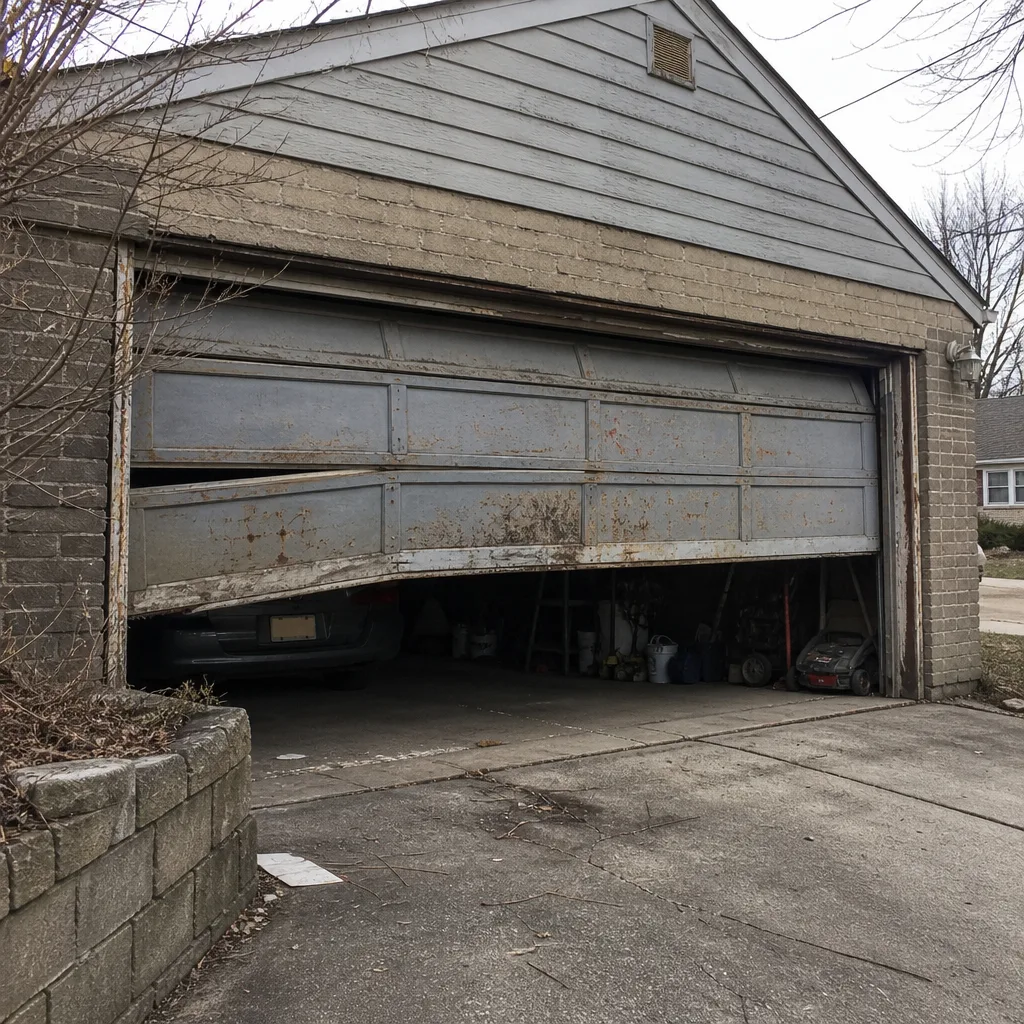 Before
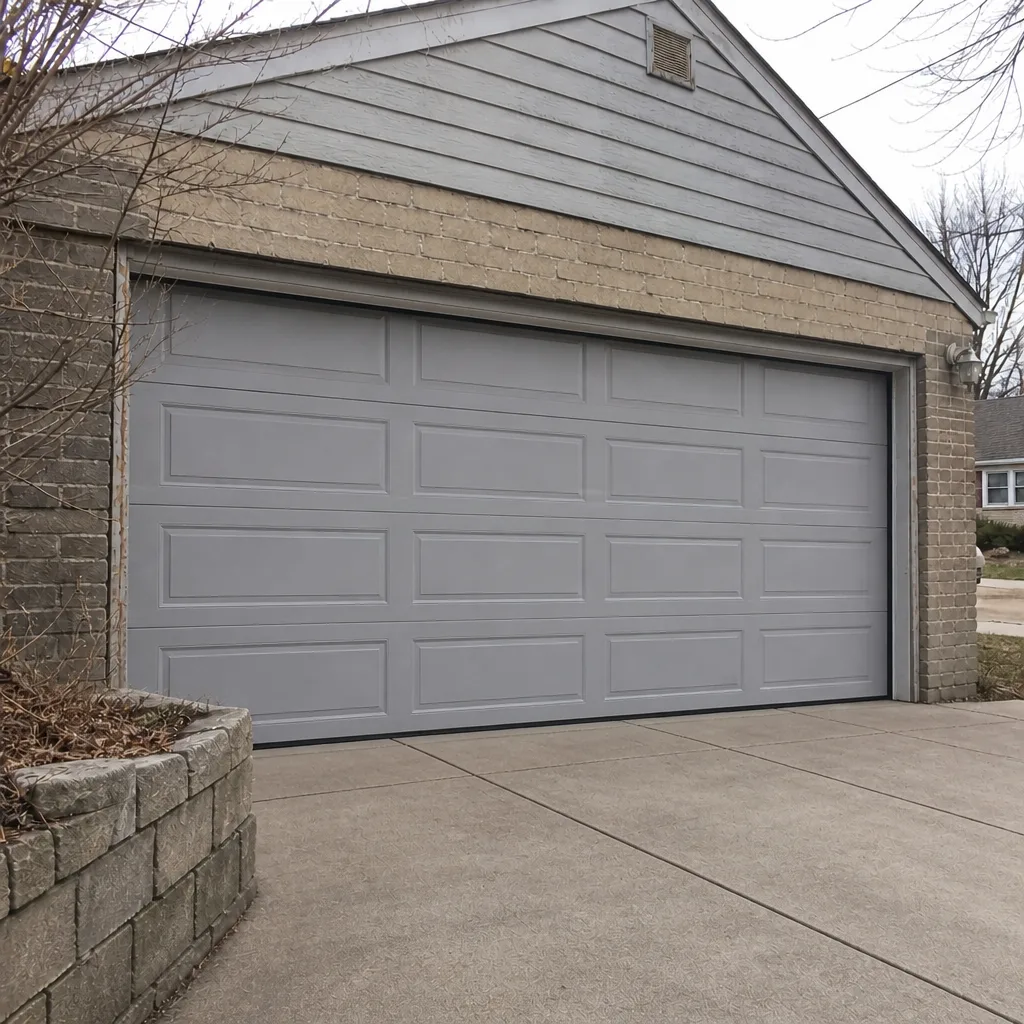 After
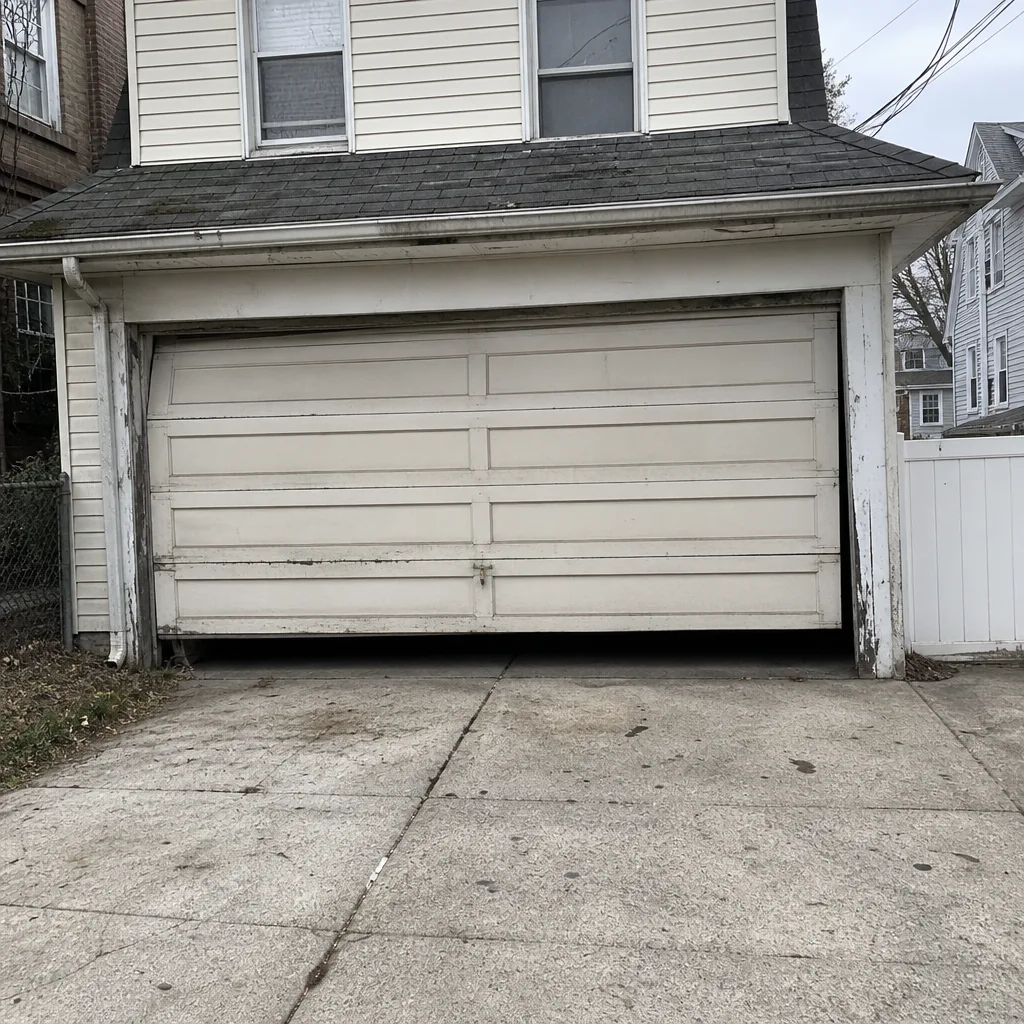 Before
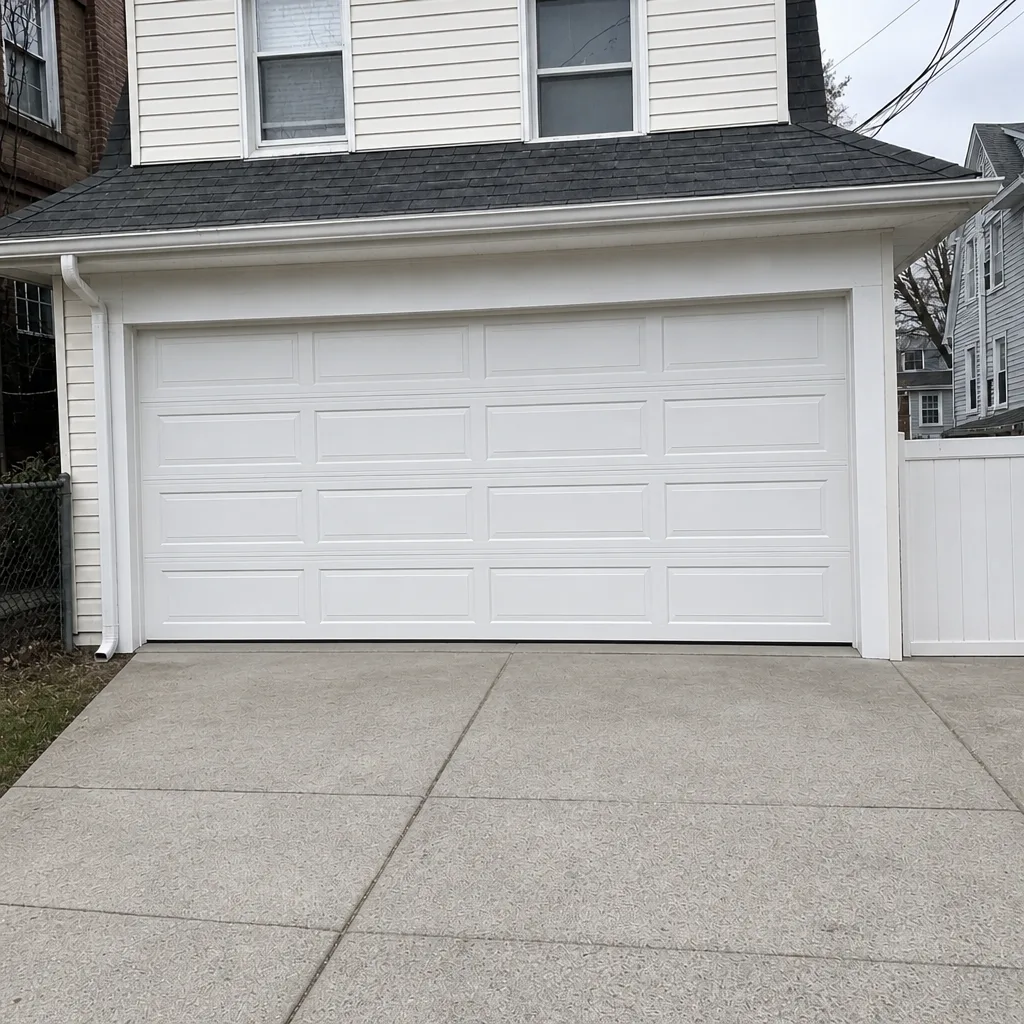 After
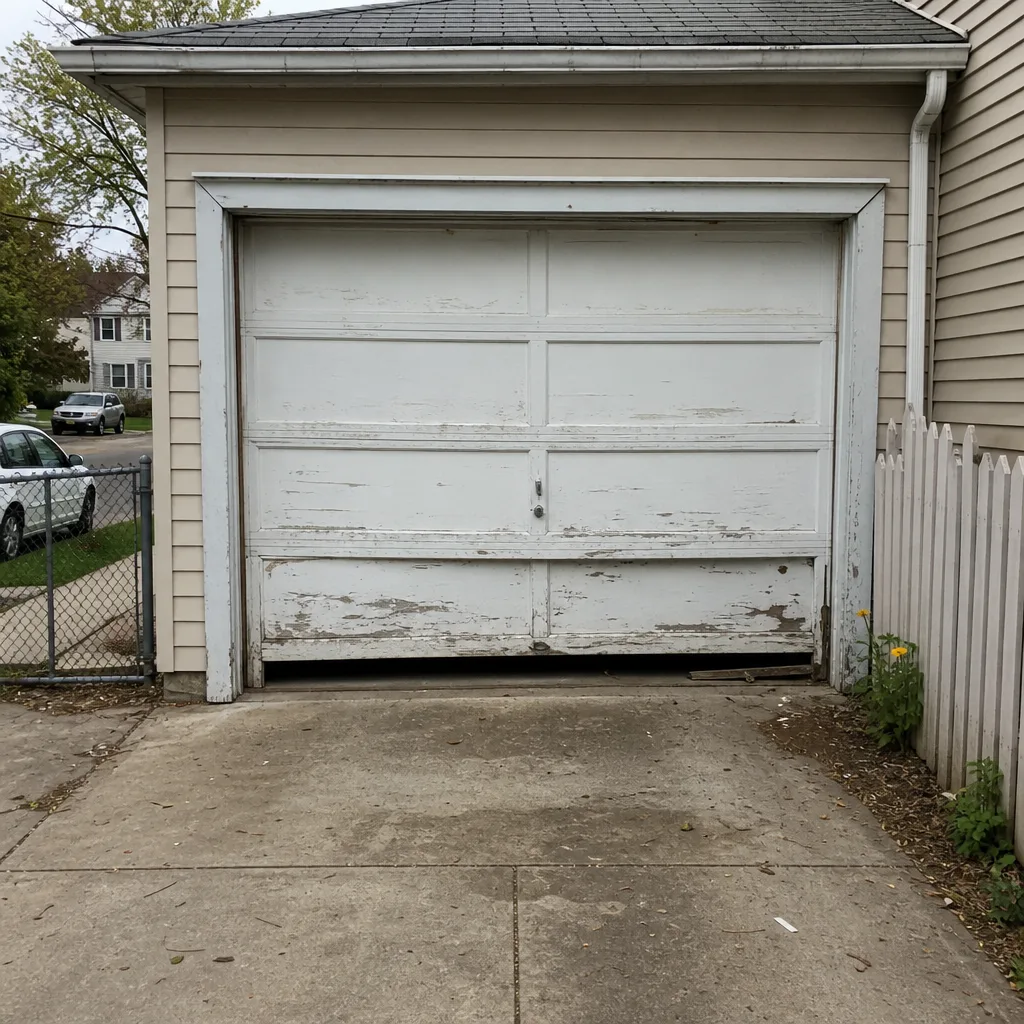 Before
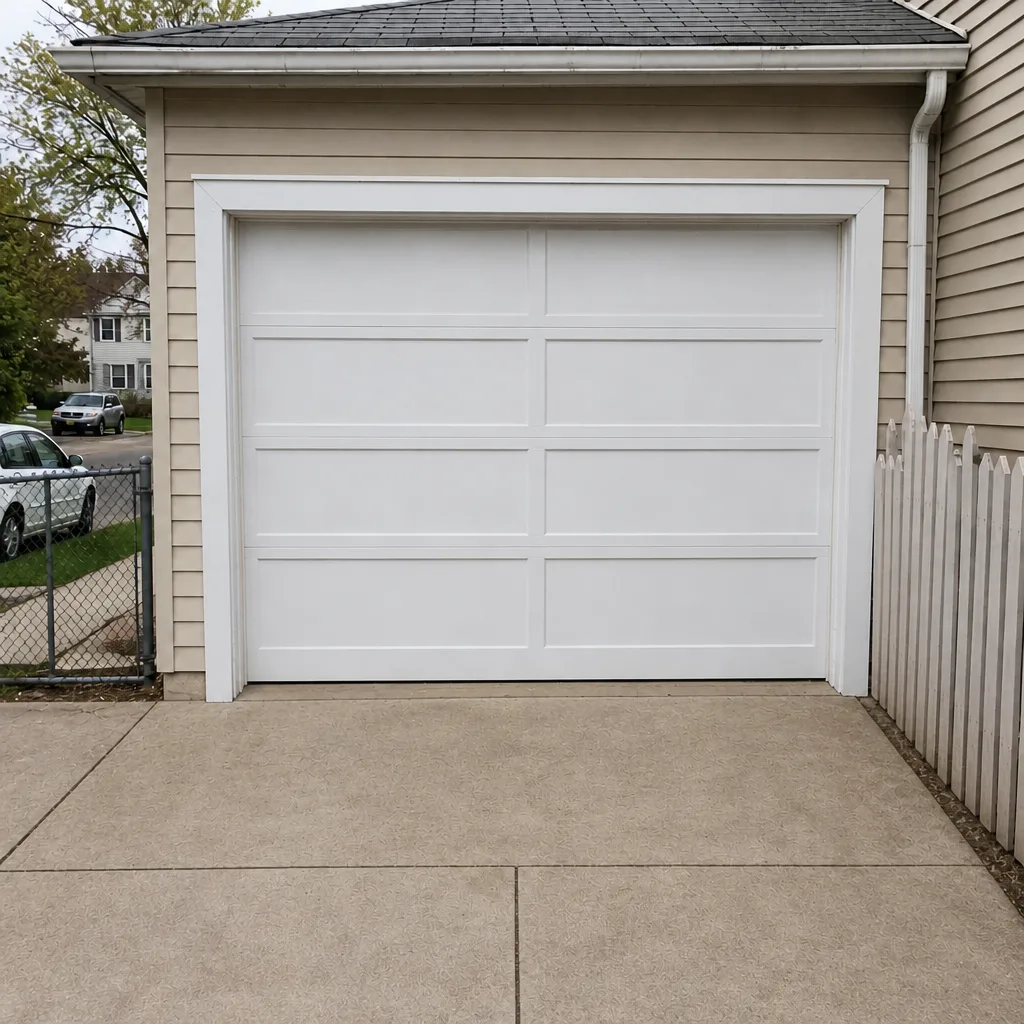 After
When to Call a Professional
Some seasonal care is safe for a homeowner: lubricating hinges and rollers, testing balance and the safety reverse, checking seals, and clearing salt and water from the threshold. Other problems should call a professional right away. A broken or sagging spring, a frayed cable, a door that hangs on one side, a door that reverses without warning, a bent track, a failed opener, and any door that has sustained impact damage all belong in the hands of a trained technician.
Two specific cases are worth a call even if they seem minor. First, a spring that has lost tension but hasn’t snapped can look fine and fail without warning – it’s more dangerous than a spring that has visibly broken, because there’s no visual warning. Second, an opener that stutters or reverses intermittently in cold or heat is usually a sign something is wearing out inside, not a random glitch.
We work on all major brands – Raynor, LiftMaster, Chamberlain, Genie, Clopay, Amarr, Wayne Dalton and Craftsman among them – so you won’t hear that your door is beyond us. Garage Door Repair Hell’s Kitchen offers free estimates in Hell’s Kitchen. Call (877) 801-5288 and we’ll schedule a visit.
Frequently Asked Questions
Schedule it twice a year: once in late September or early October, before the first hard freeze, and once in late March or early April, just as the freeze-thaw period gets into full swing. Fall prep is about sealing the door against winter; spring inspection is about catching damage that winter caused. If you’re in a below-grade garage, do a third visual check in July to catch summer humidity effects.
Because it’s the thaw, not the cold, that does the damage. Every time the temperature crosses freezing – which in March happens almost every day – the torsion spring’s steel expands and contracts a tiny amount. Multiplied over dozens of cycles in a few weeks, that works the metal far more than a cold snap in January. March and early April are the highest-risk weeks for spring and cable failure in Hell’s Kitchen.
A purpose-made garage door lubricant rated for cold-weather use. In our experience, general oils and greases thicken below 20°F and make the door harder to operate, while penetrating oil like WD-40 strips the grease from bearings. Apply lubricant to hinges, roller stems, torsion bar bearings and the opener rail only.
Yes. If the bottom seal freezes to the floor overnight, opening the door will either tear the seal off its retainer or push the opener past its force limit and cause it to reverse. Repeated freeze-thaw against a stiff seal is one of the fastest ways to fail a seal in Hell’s Kitchen. Keep standing water clear of the threshold and use a cold-rated seal.
Yes – inspect more often and expect rust. Below-grade garages don’t dry out the way an open driveway does. Condensation on tracks, roller stems and hinges is routine in summer, and that moisture stays put in winter. Check for rust on the tracks and roller stems, and watch the bottom seal particularly carefully because salt and water pool in the threshold area.
Test the safety reverse and check the sensor alignment first. If both are fine, the opener’s force limit is probably set too low for winter load – cold grease, stiff rollers and a stiff seal all make the door harder to move. Have the opener serviced before it fails completely. A door that strands you outside in January is a security problem, not just an inconvenience.
The Bottom Line
Seasonal garage door care in Hell’s Kitchen is not a four-season routine with equal weight. Fall and spring do most of the work: fall prepares the door for the cold, and spring catches the damage the winter caused. The March freeze-thaw period is the riskiest window of the year for springs and cables, and it’s the one most homeowners miss. Summer humidity is a separate problem that hits wood doors, seals and opener boards in ways that don’t show up in winter. And if your garage is below grade, every one of those effects is worse. Annual inspections twice a year, a cold-rated lubricant in the right places, and a call to a professional when anything looks off will keep your door working through every one of them.
Written by the team at Garage Door Repair Hell’s Kitchen.